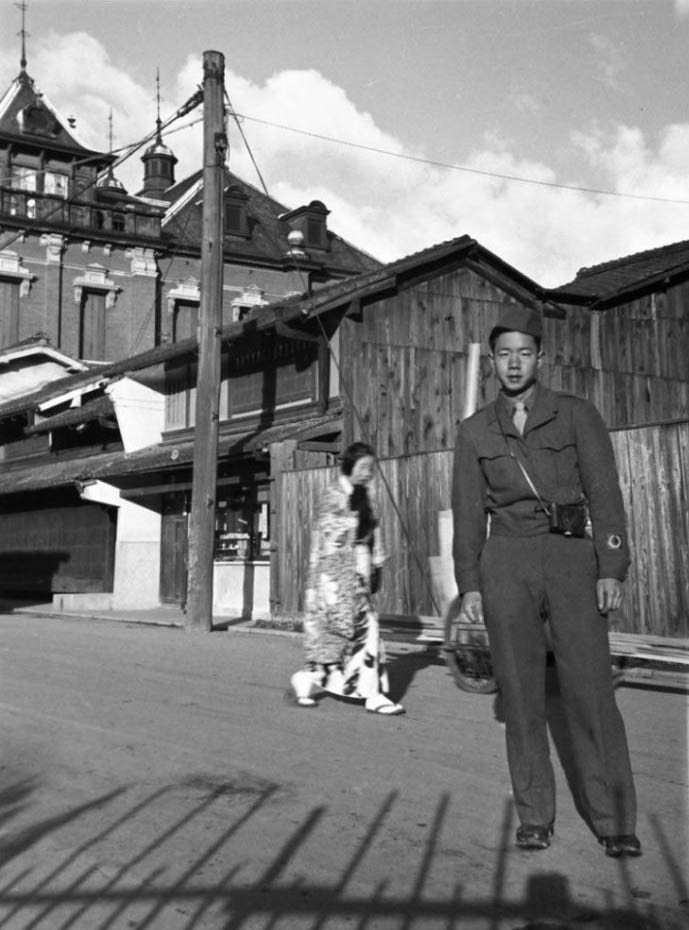
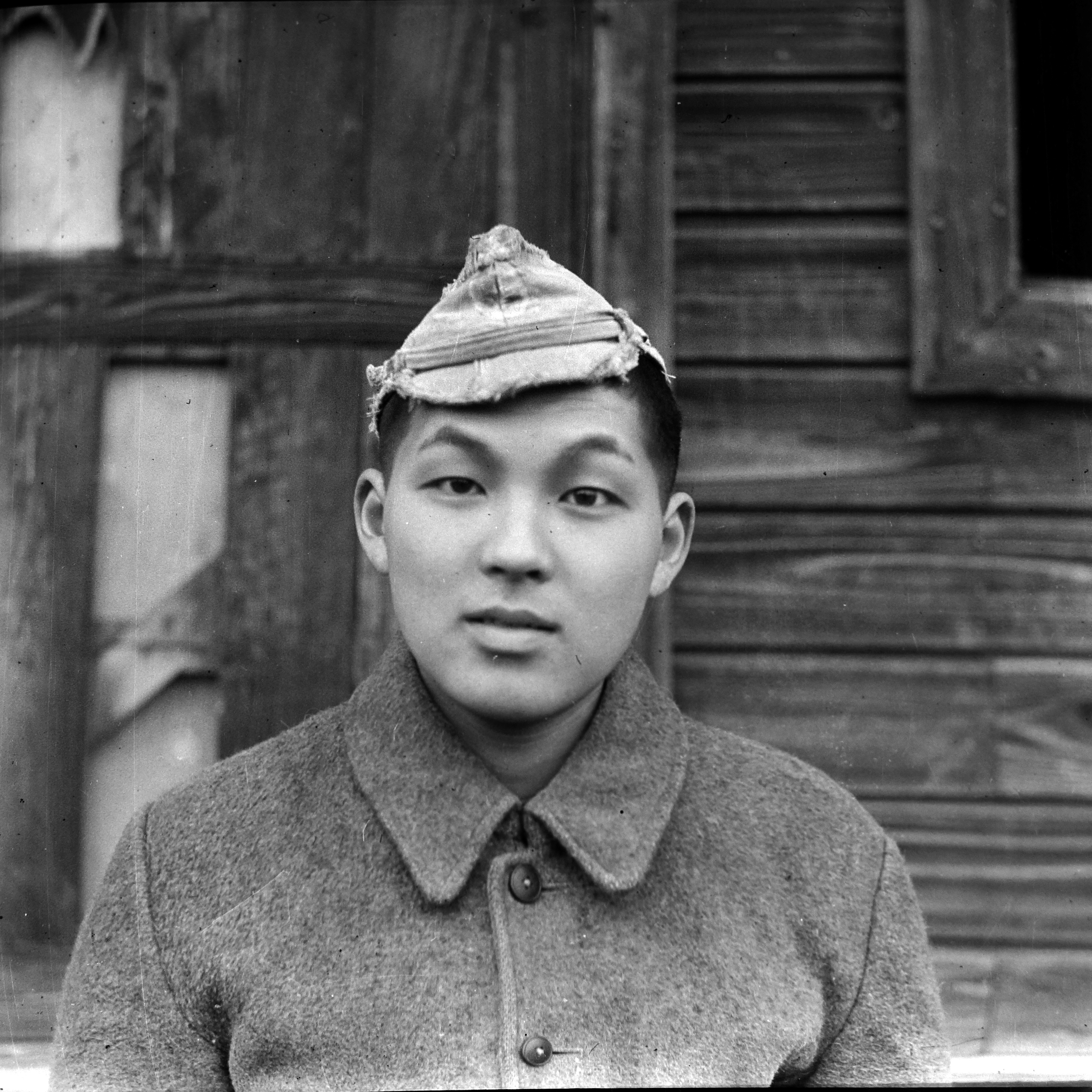
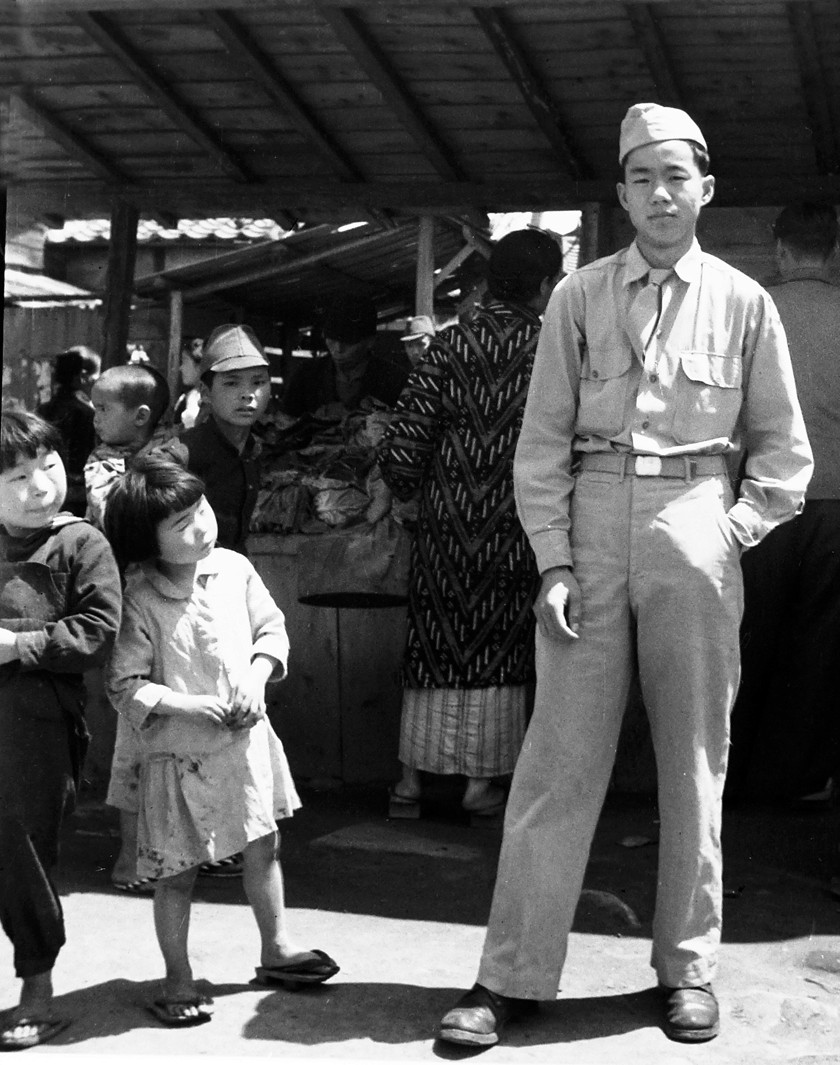
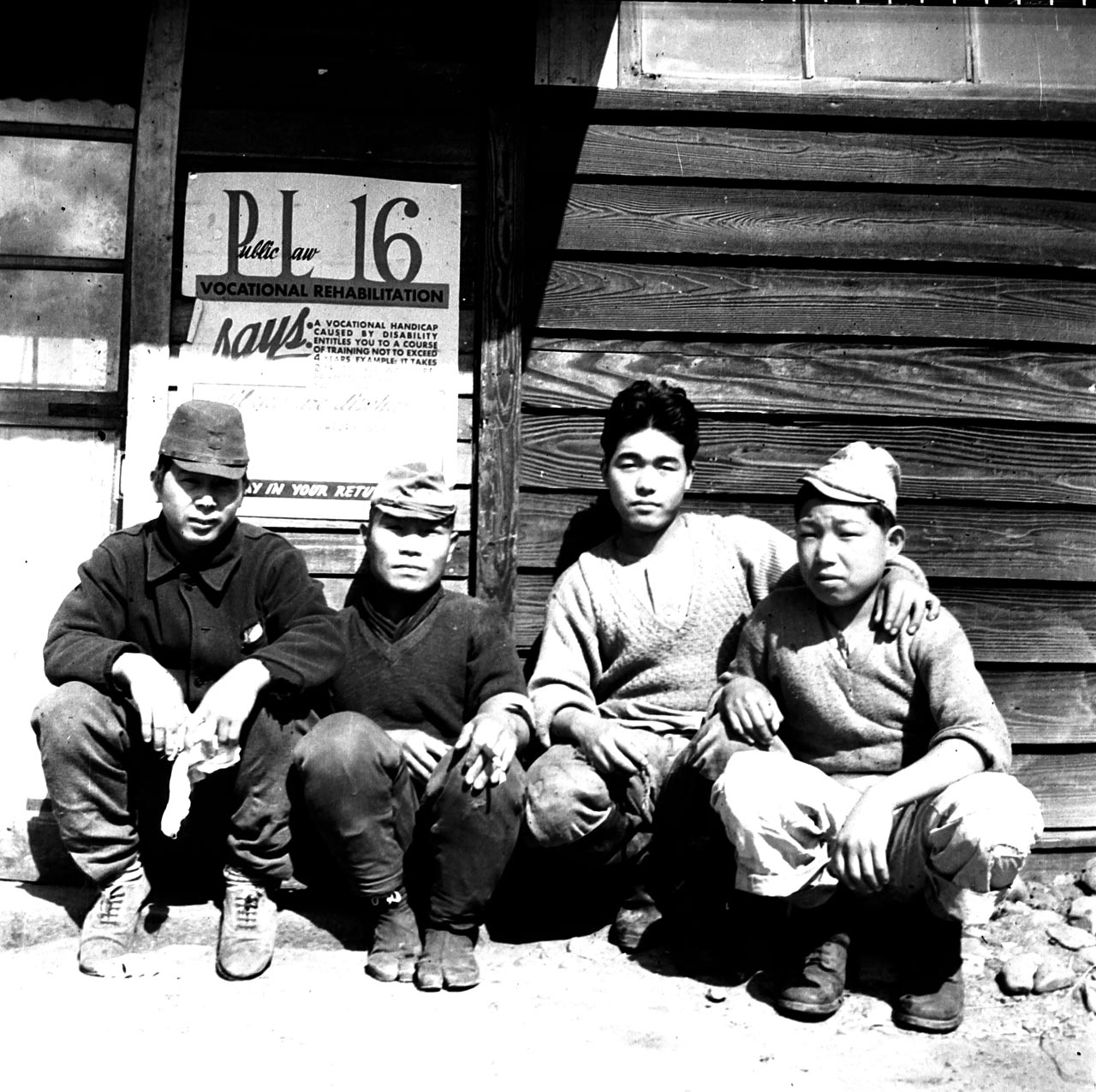
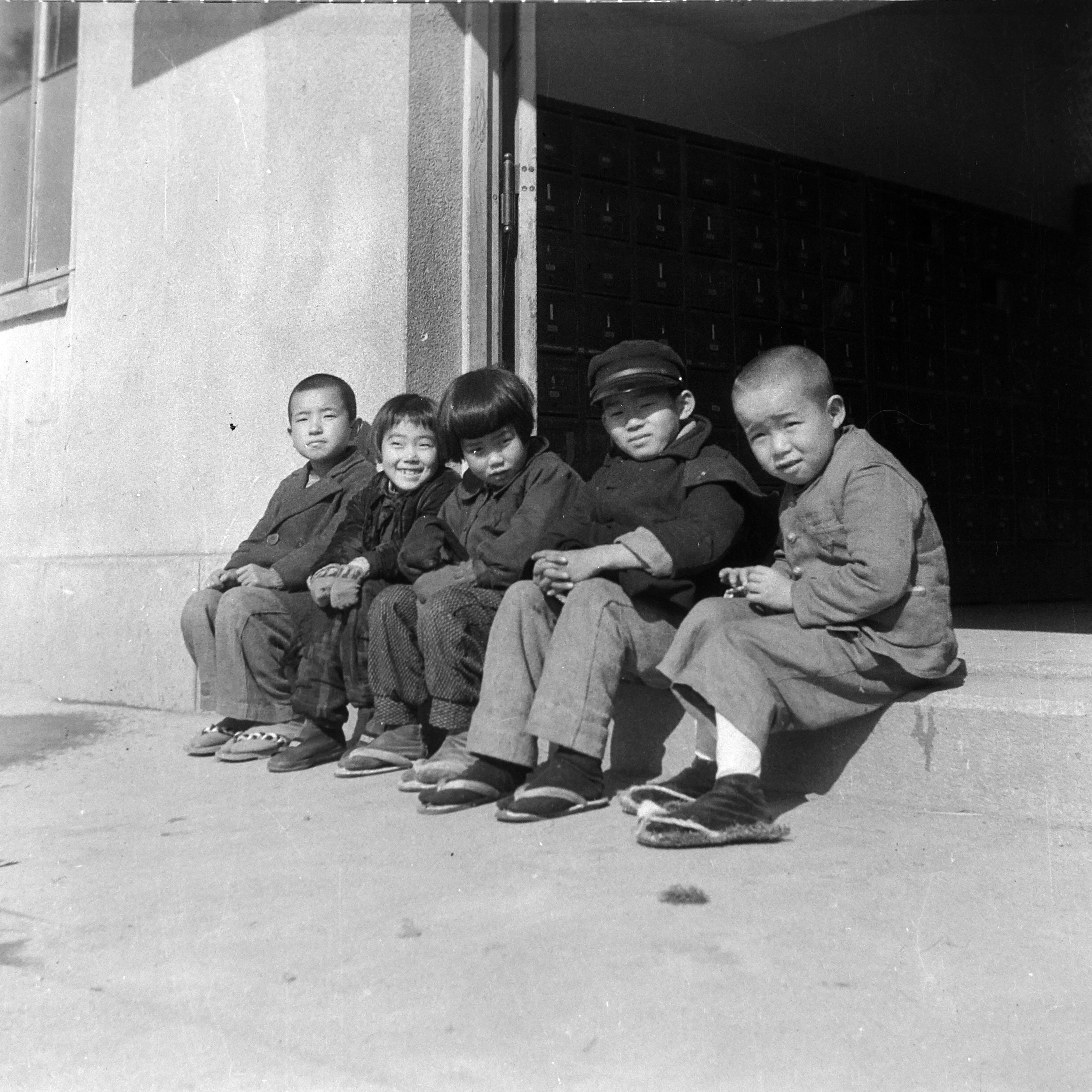
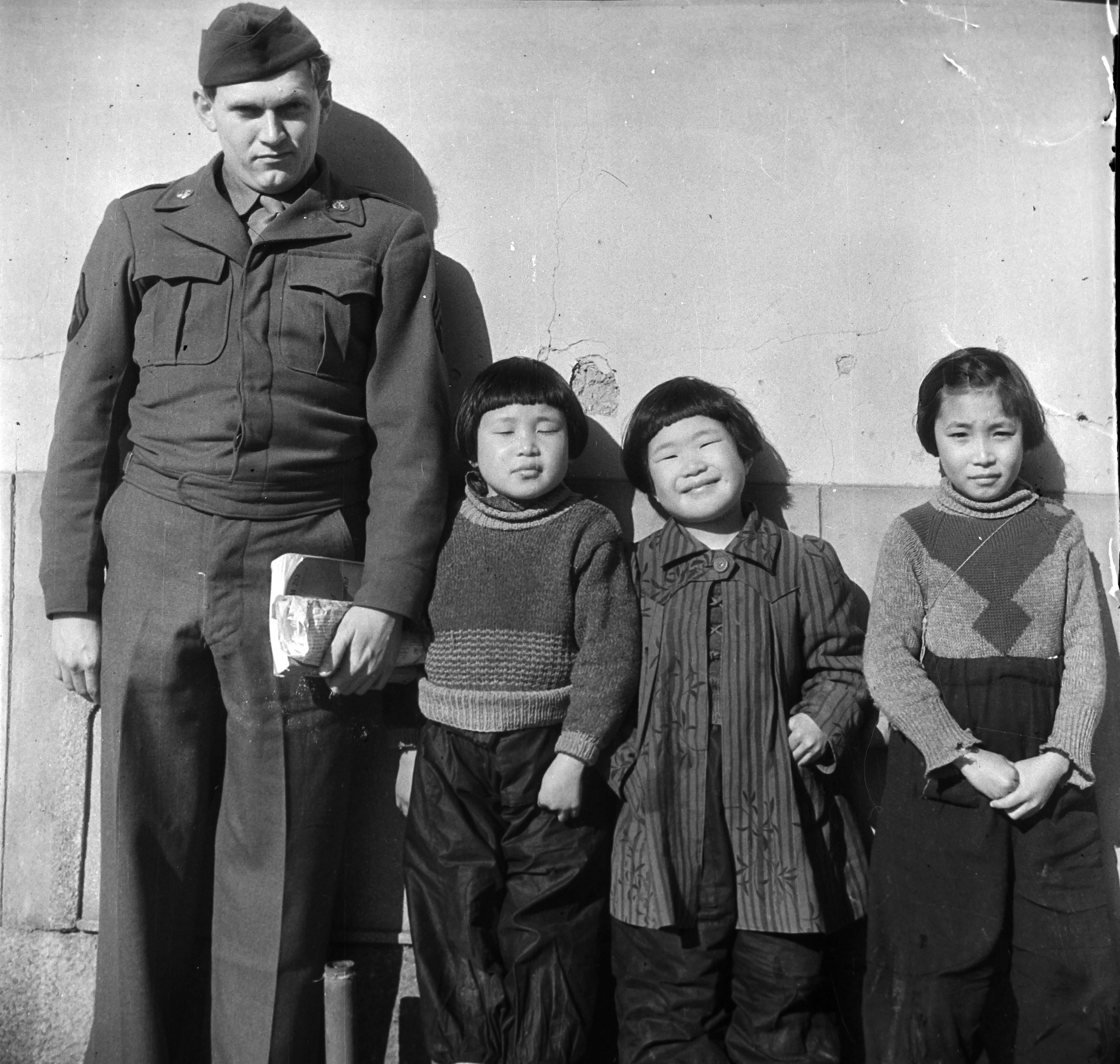
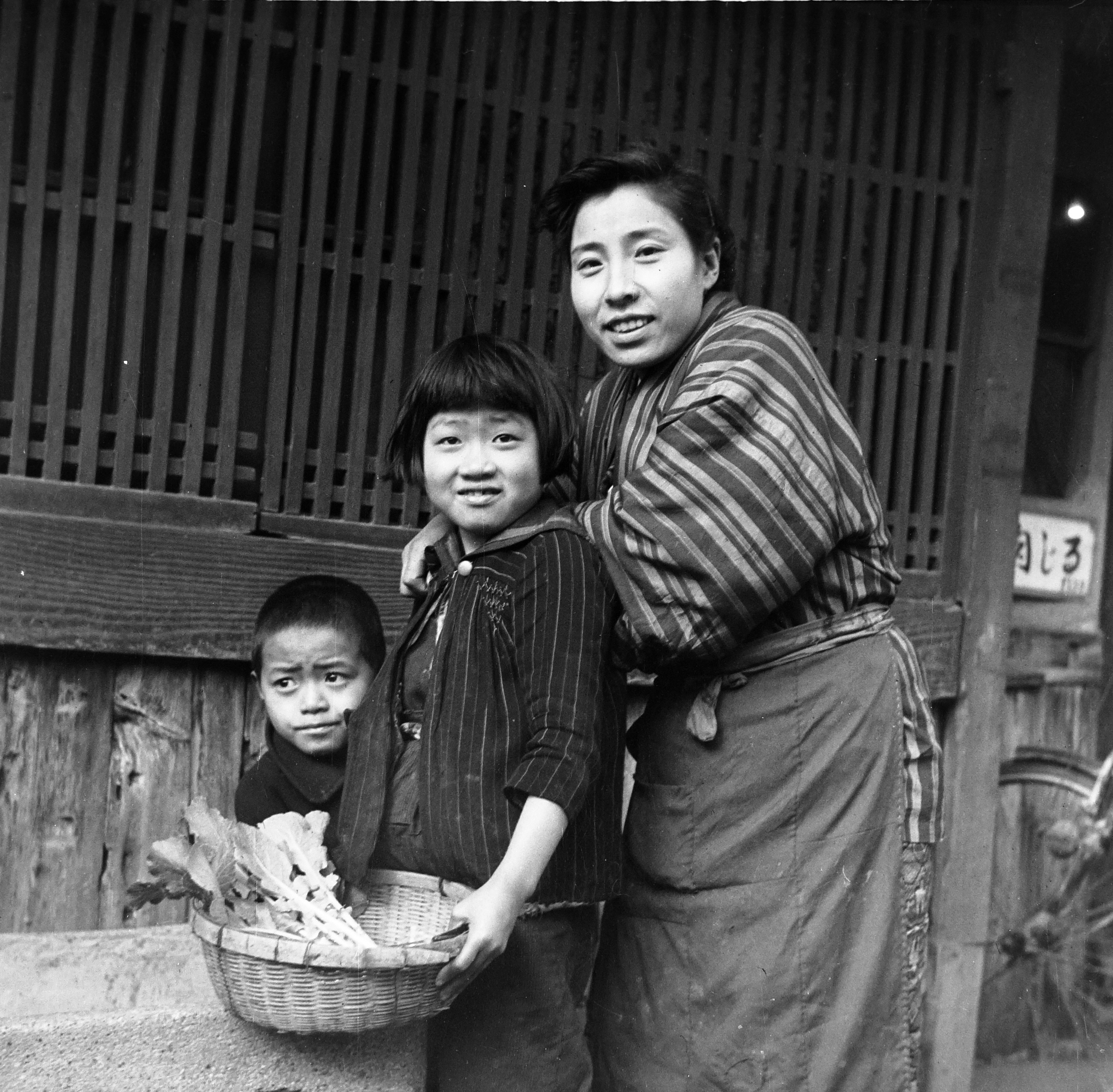
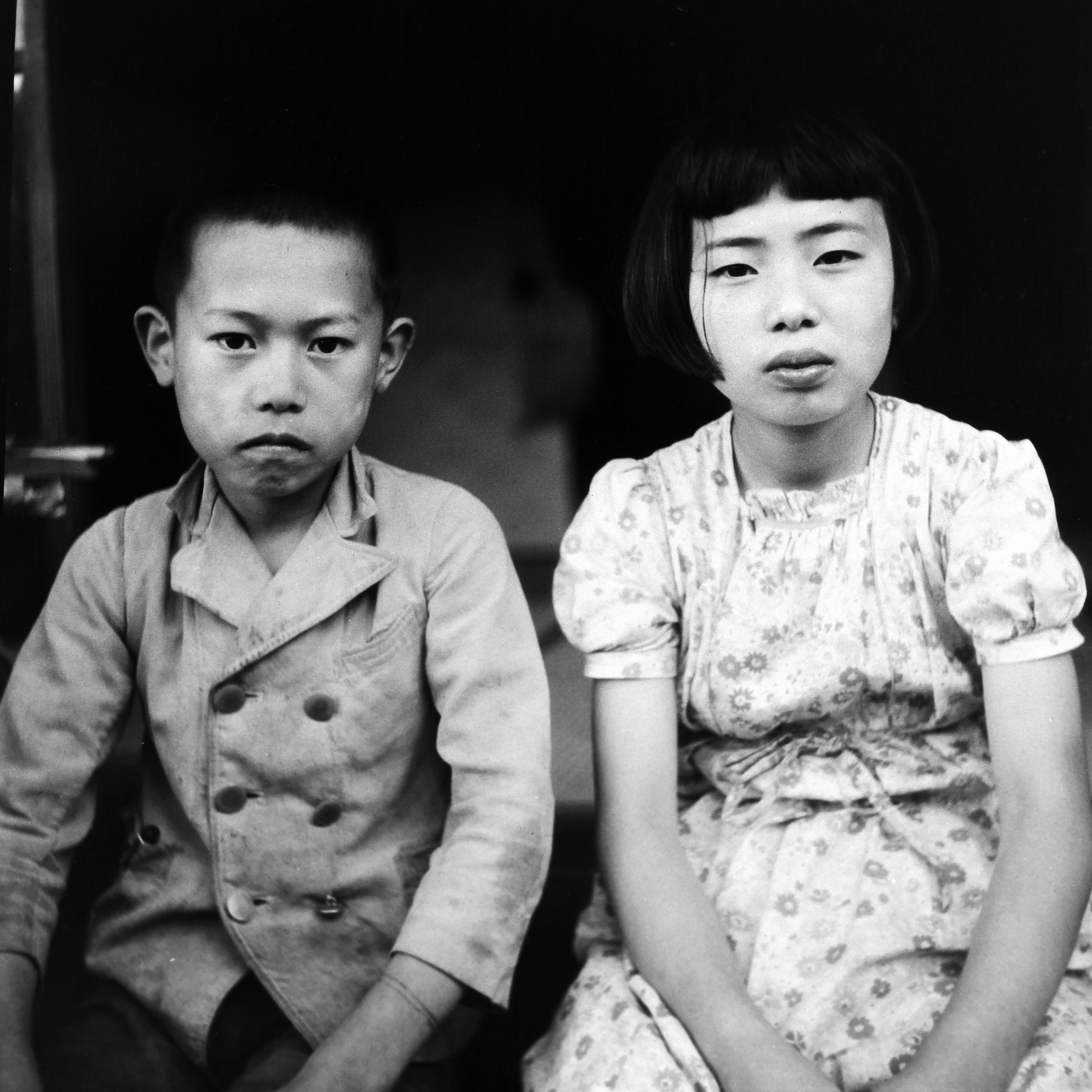
Resurrecting the 1946 lost photography of Wayne Wong through gaze-based interaction—a museum exhibit that turns the act of looking into an act of storytelling.
OBSCURA
A DYNAMICALLY CURATED IMMERSIVE EXHIBIT
My role in leading, designing, and developing an immersive museum exhibit at the Museum of History and Industry.
ROLE
Project Lead, Design, Prototyping, Dev
DURATION
2024-2025
EXHIBITED
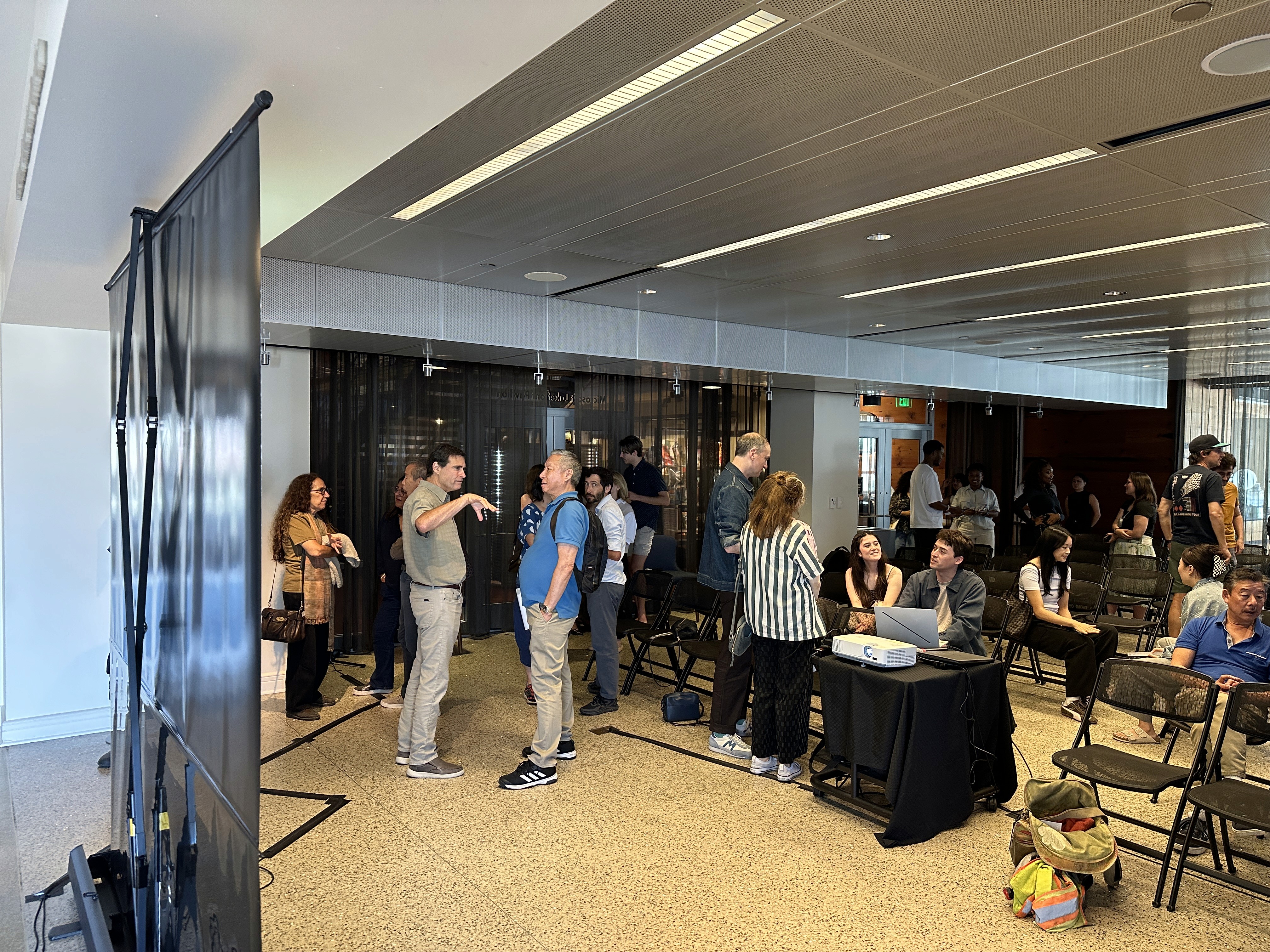
Sept 13, 2025
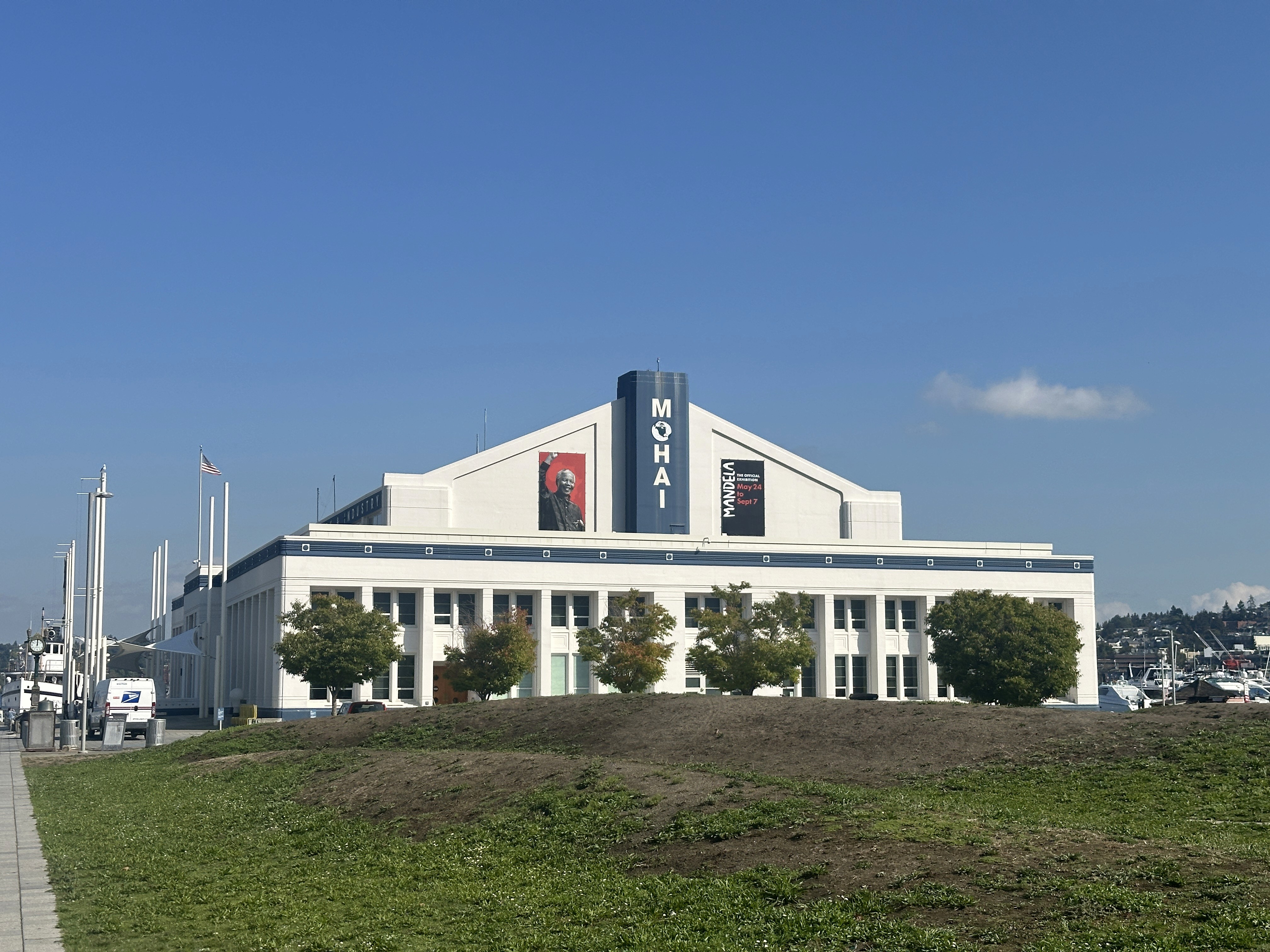
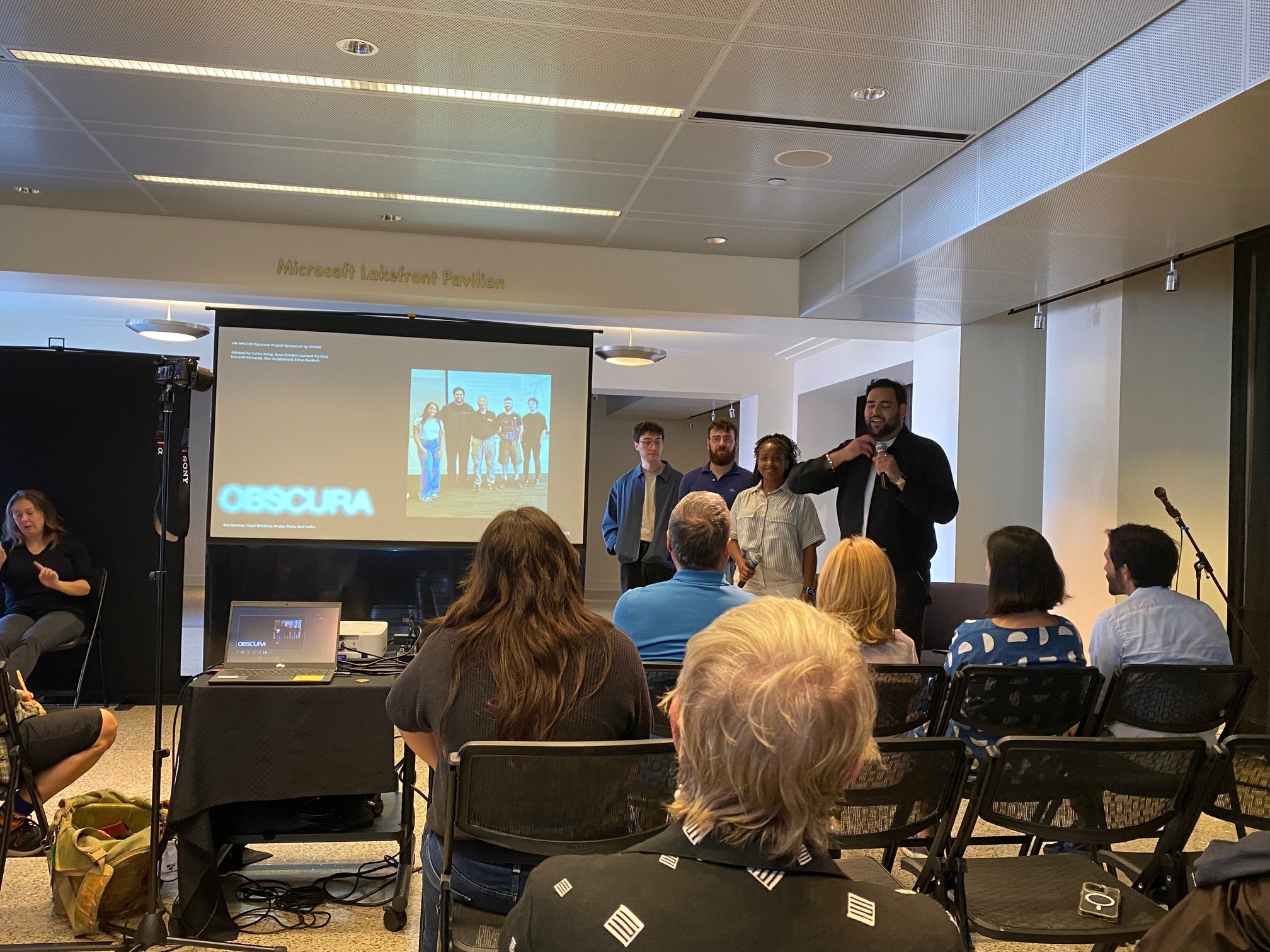
MOHAI, Seattle
The Story in the Footlocker
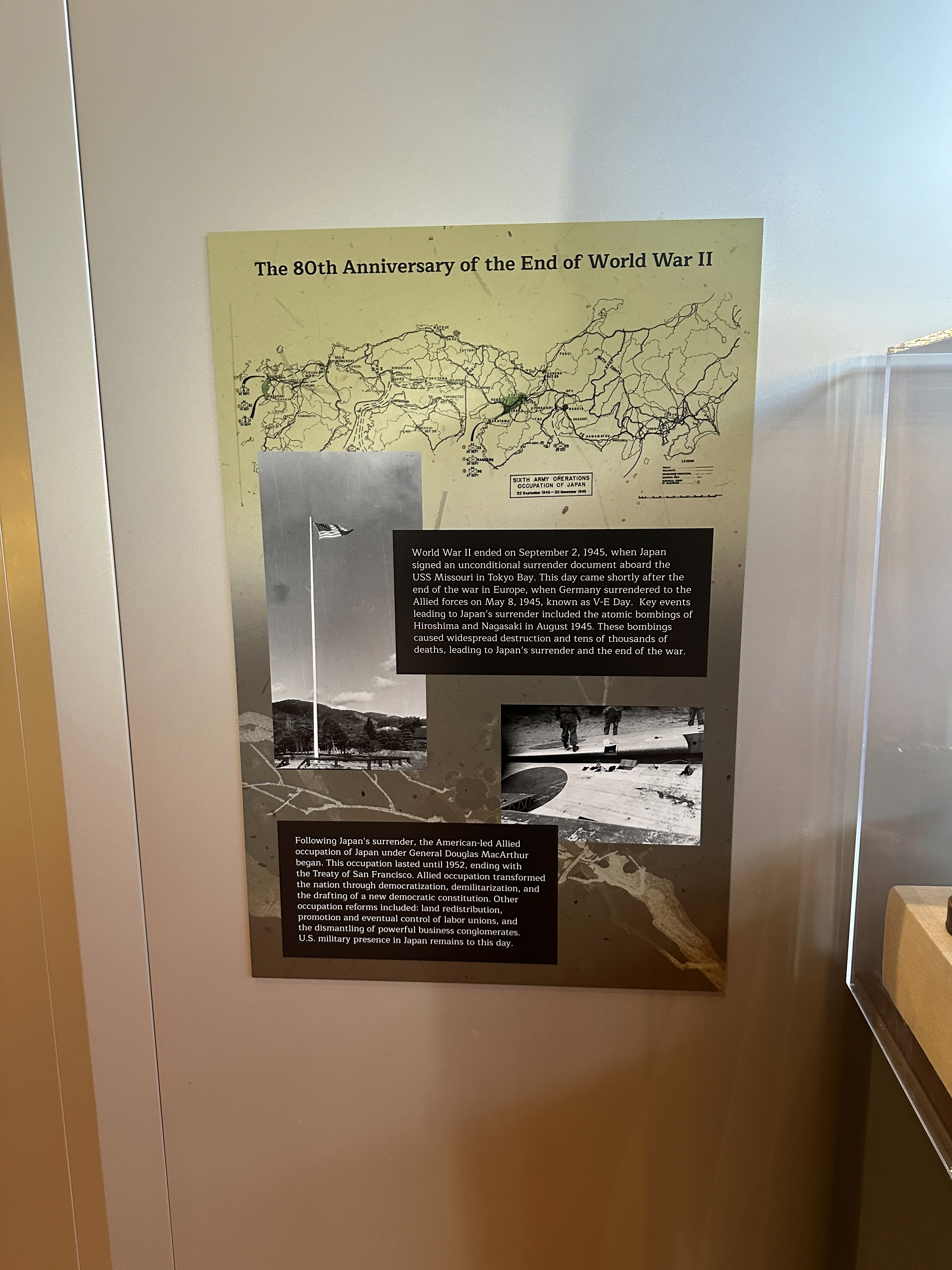
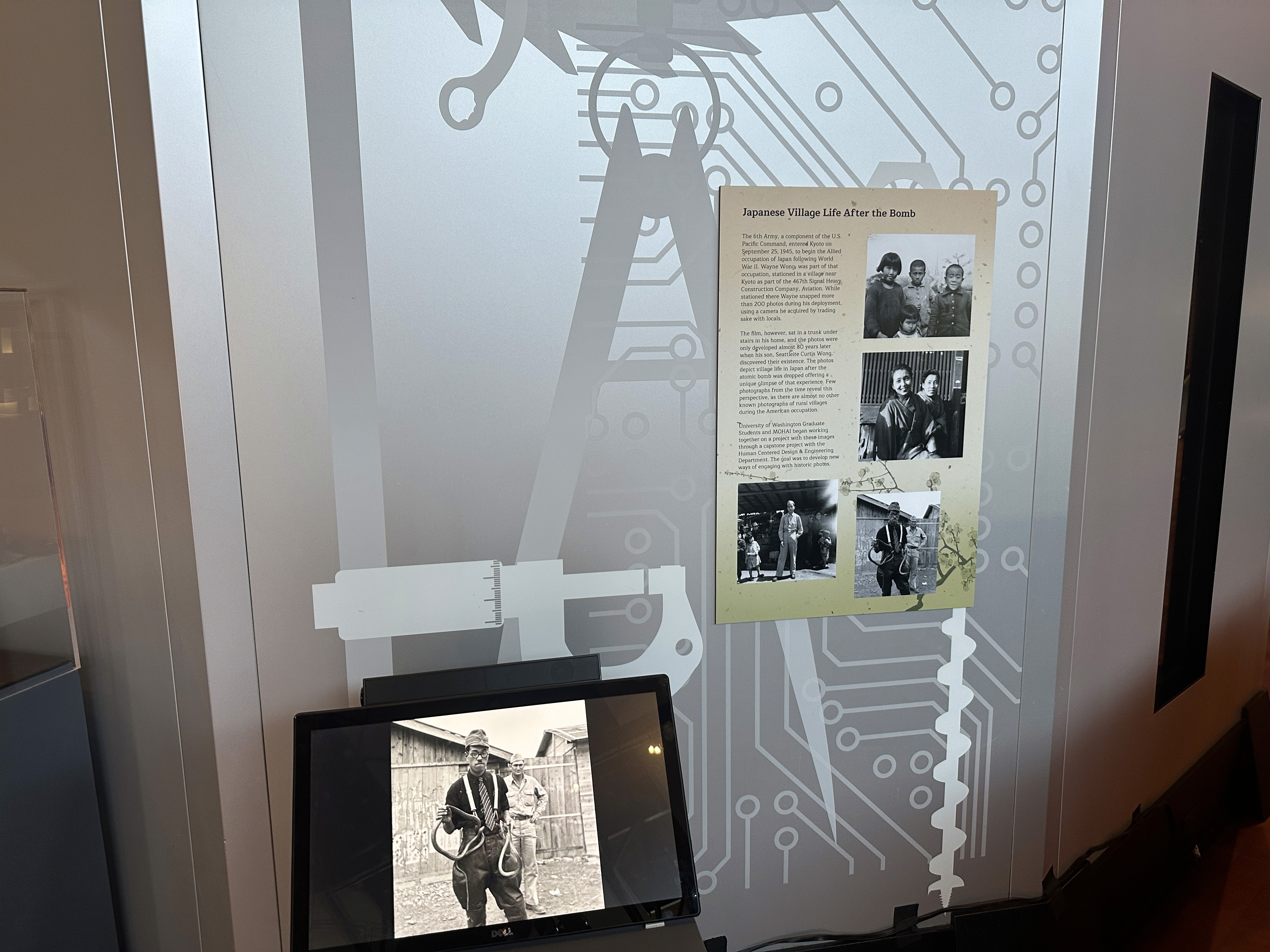
In 1946, during the immediate aftermath of World War II, a young Chinese American soldier named Wayne Wong was traveling through the streets of Japan as a member of the United States Signal Corps. His job was to help rebuild infrastructure in a war-torn nation.
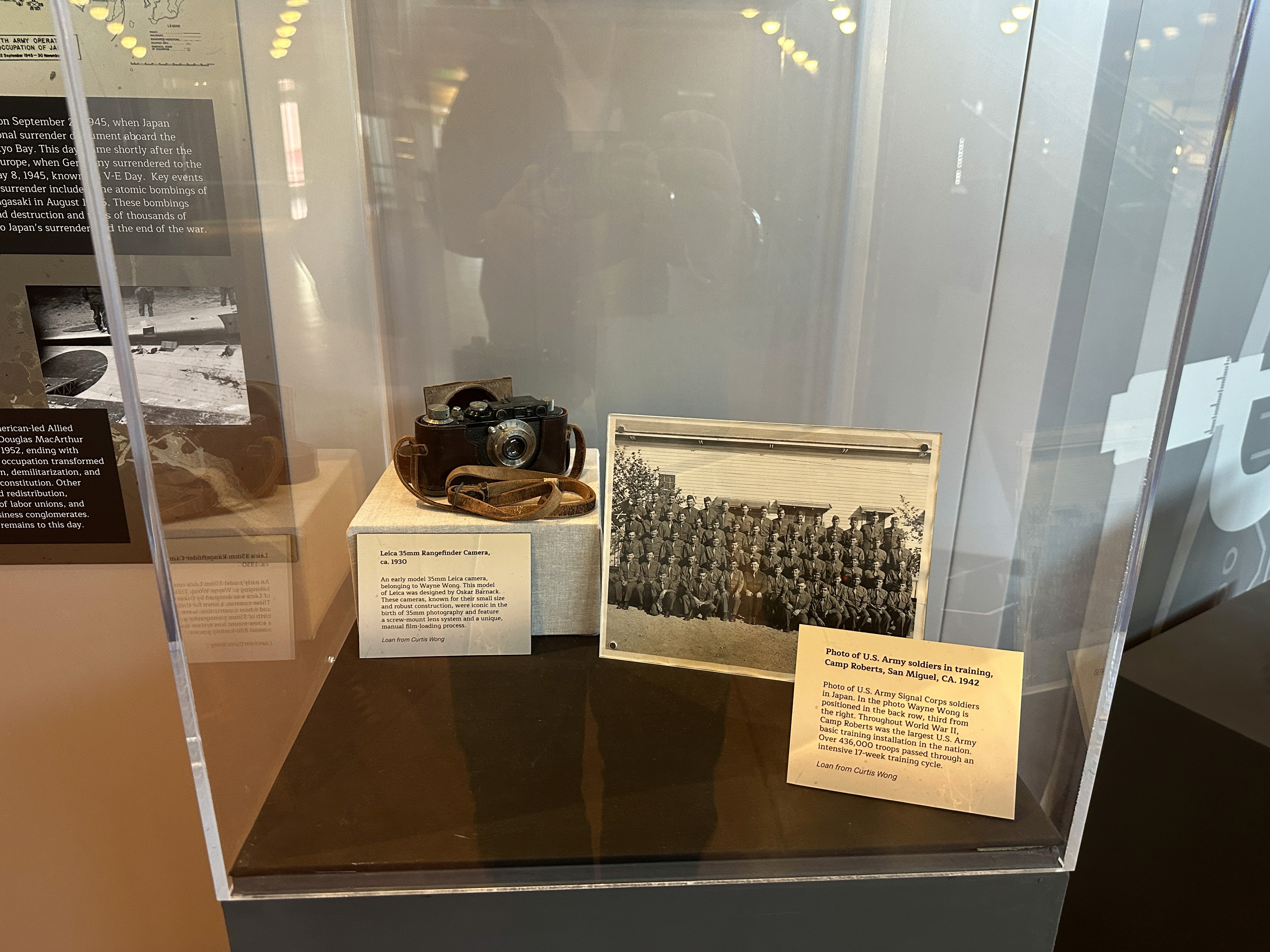
Fast-forward nearly 80 years. Curtis Wong asked his father a simple question: "What did you do in the War?" Wayne pointed to a dark green wooden footlocker under the house. Once opened, Curtis found cameras, unexposed 35mm film, and dozens of images of Japanese people and American soldiers—a hidden archive of postwar life, masterfully captured through Wayne's lens.
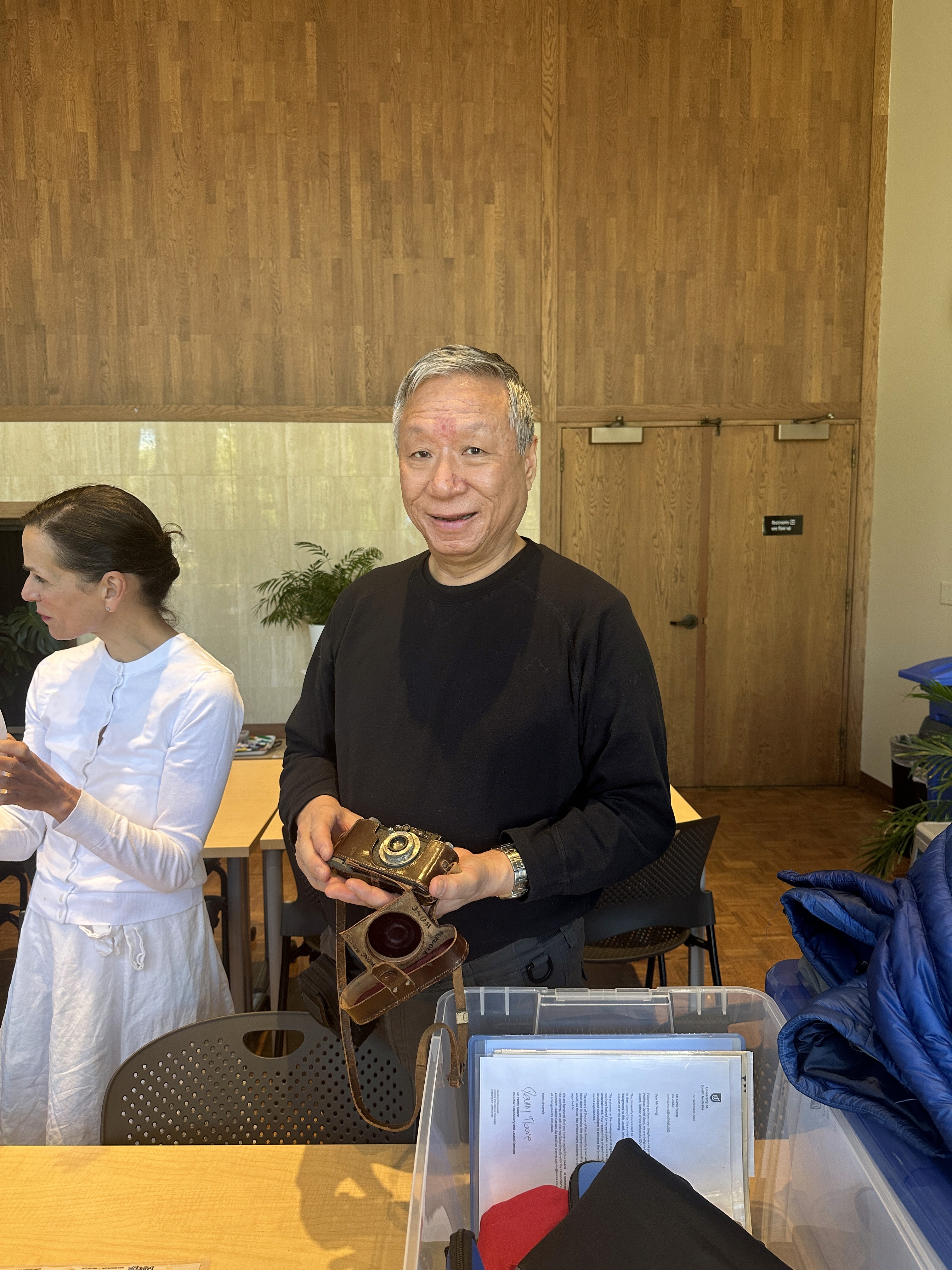
Curtis Wong holding his father's 80 year old Barnack Leica II Camera
The Museum of History and Industry (MOHAI), paired with Curtis Wong, approached our team at the University of Washington MHCI+D program with these images and a prompt: create something boundary-pushing. The result was OBSCURA—a dynamically curated photographic documentary experience.
OBSCURA Exhibition Trailer
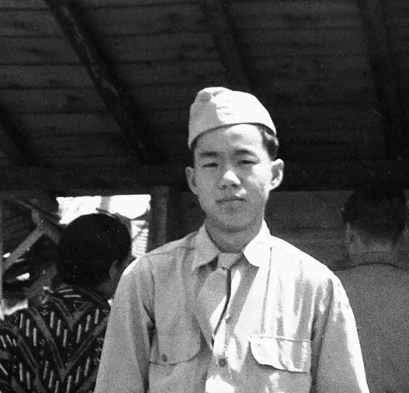
Wayne Wong in Japan, 1942.
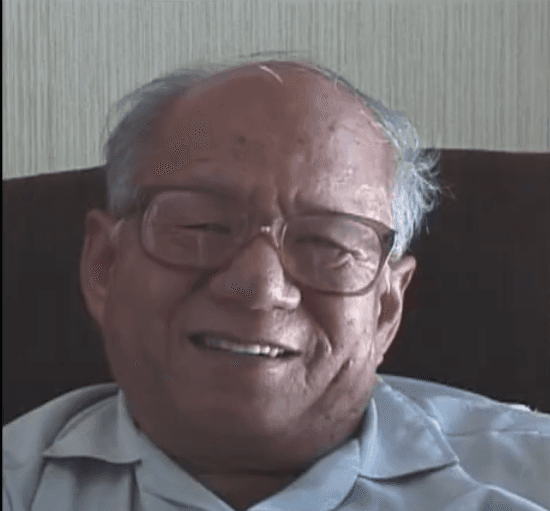
Wayne Wong during his interview with Curtis in 2019.
Two Audiences
The immersed viewer controls the experience. The audience witnesses their choices.
Experience Overview
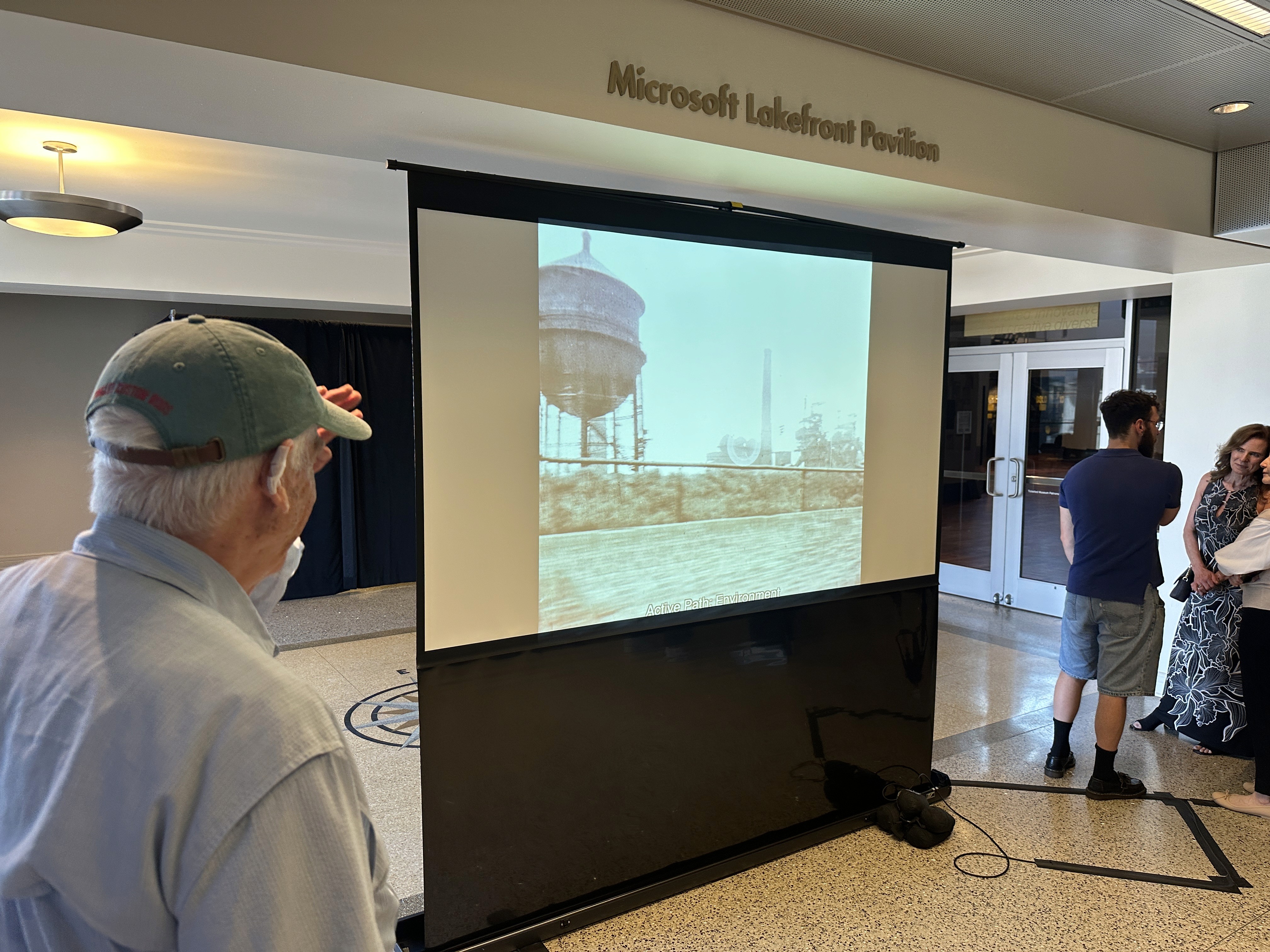
Obscura is a gaze-driven documentary system with two simultaneous experiences: one viewer inside a dark booth controls the narrative through their attention, while an audience outside watches the journey unfold in real-time.
The Gaze Loop
As the immersed viewer scans a photograph, the system detects which zone they dwell on longest—faces, clothing, environments, or other elements. This triggers the next image in that thematic path, creating a documentary that's unique to each viewer's subconscious interests.
The Gaze Loop
How attention becomes narrative
01
Gaze
02
Faces
Clothing
Environ.
Detect
03
Select
04
Reveal
Viewer scans the photograph, drawn to different elements
The Takeaway
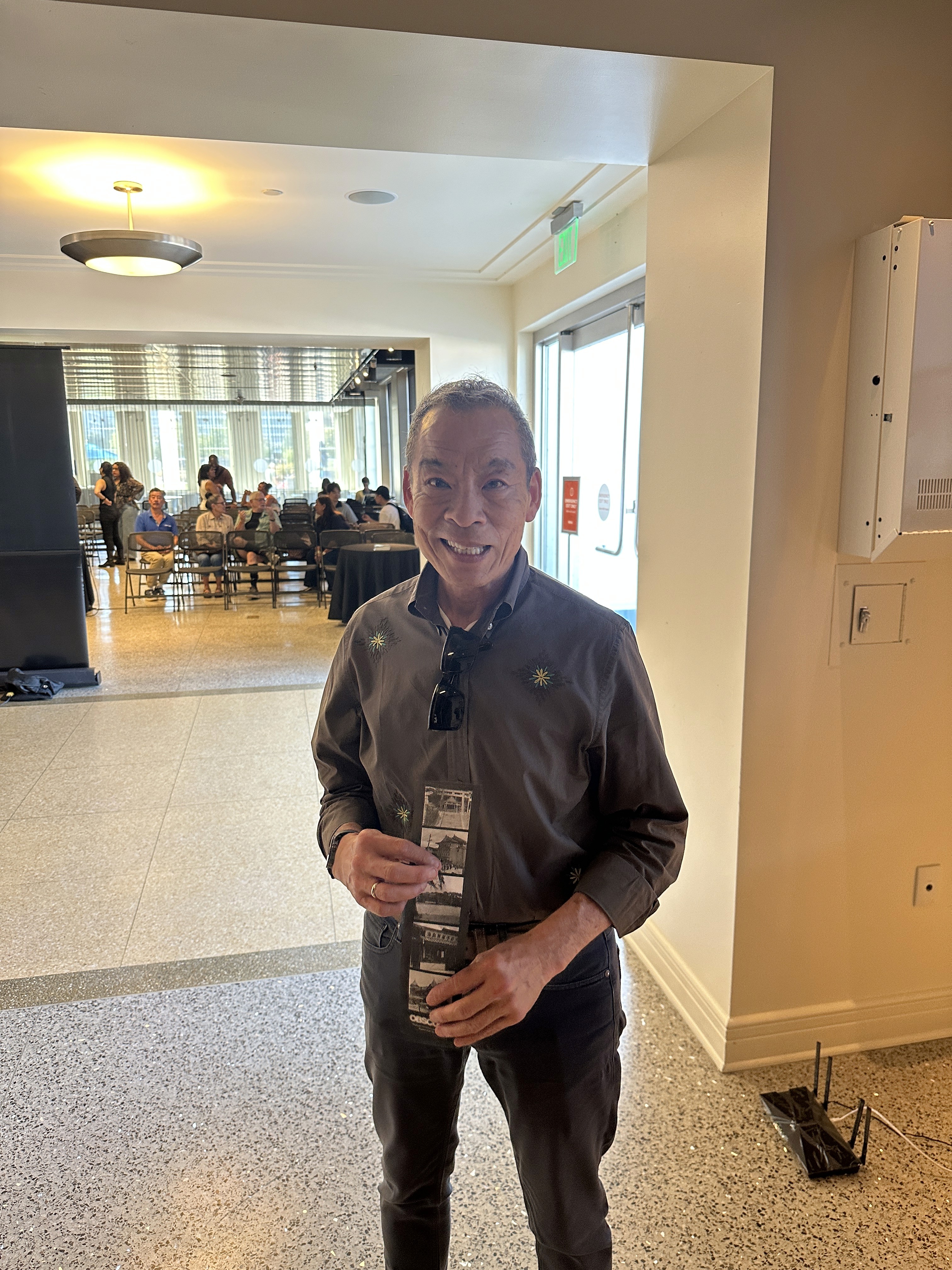
When the viewer exits, they receive a physical photo-strip—a souvenir showing which thematic paths they activated most. It becomes a conversation piece: "Why did I focus on faces while you noticed the environments?"
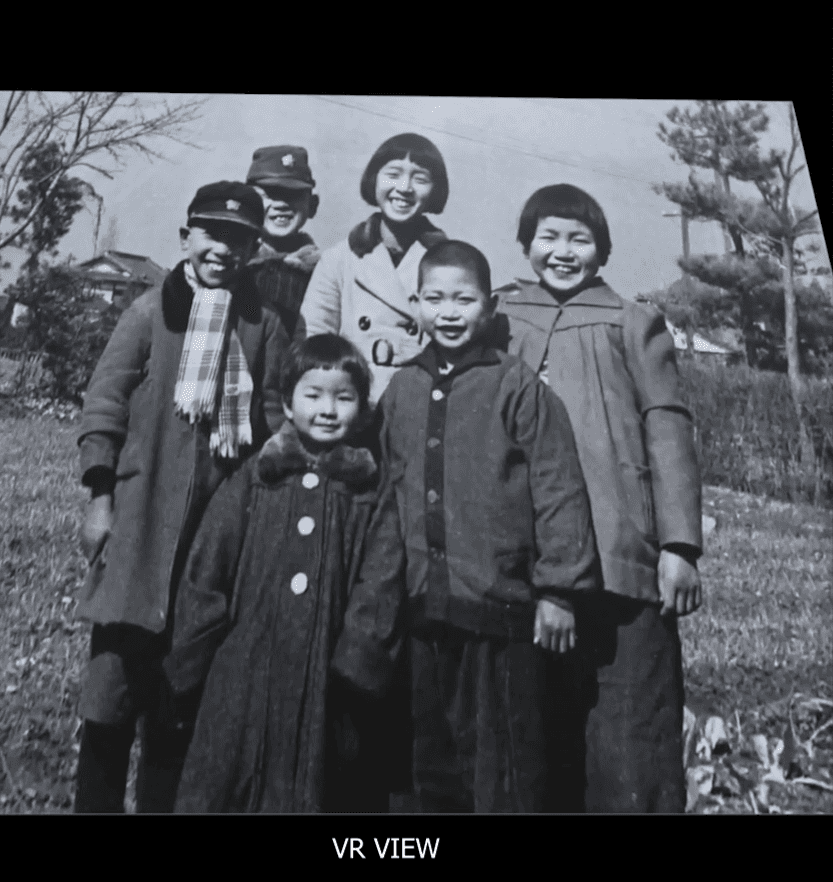
Immersed Viewer Perspective
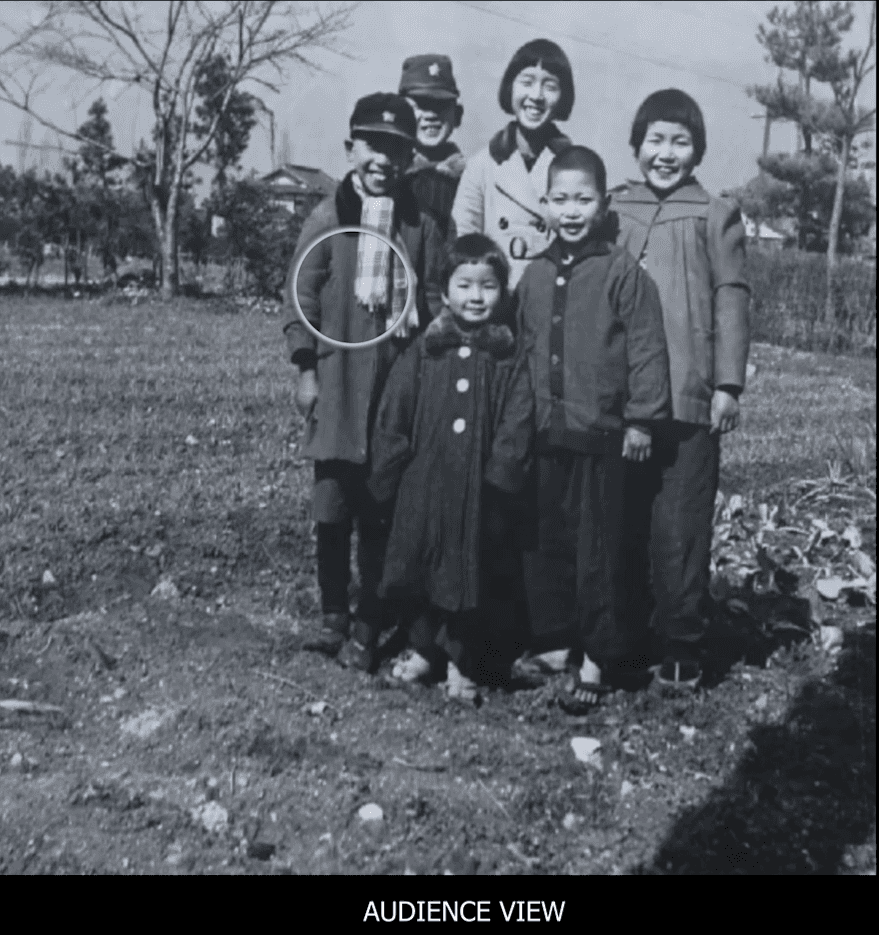
Audience Perspective with Gaze Indicator
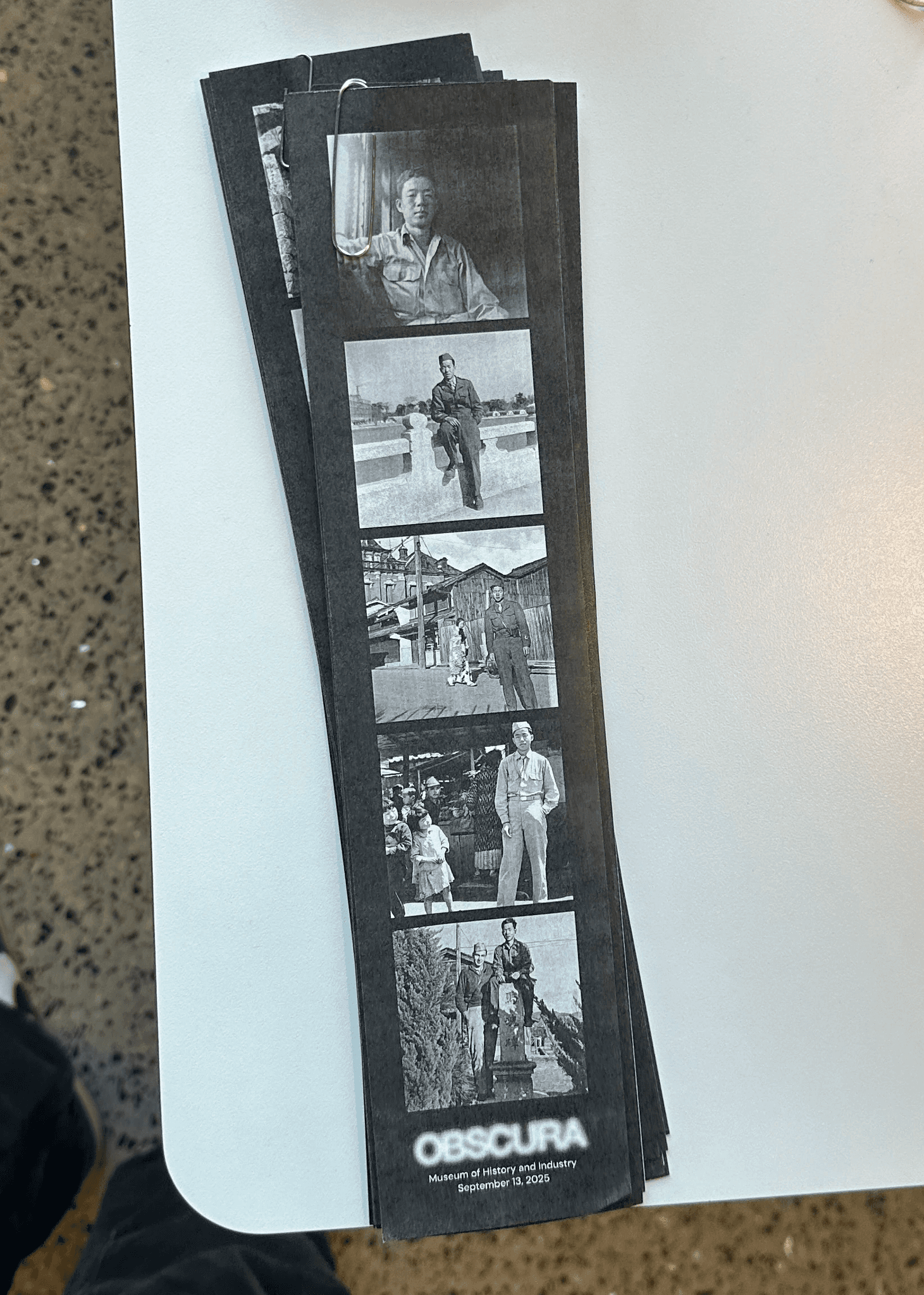
"Wayne" themed photo-strip
Philosophy
We wanted to explore new ways to present images as an orchestrated experience.
Intent
Speak to the Audience While Respecting the Artist
Wayne took hundreds of photos but didn't talk on his intent. The exhibit allows users to view his photos through the Portola Obscura experience, tracking what parts of an image they dwell on. An external audience views the images through the first viewer's eyes, collectively defining the role of intent.
Build Anticipation
The "Audience View" offered a low-pressure way to engage before entering. People could wonder, "Why are they focused on the clothing when I'm drawn to the temple?" This turned waiting into an active, social event.
Give People Something to Talk About
Recognizing the value of conversation before and after an experience, I designed a photo-strip souvenir. This strip visualizes which parts of an image participants looked at most, intending to spark comparative conversations between those who received one.
Create Space for Meaningful Engagement
Today's image engagement, largely through social media, often overlooks the significance of what we see. Wayne's photos, from a time when images held gravity, regain that importance in this exhibit. By presenting the large, focused photos individually, the exhibit creates an intimate setting for detailed investigation.
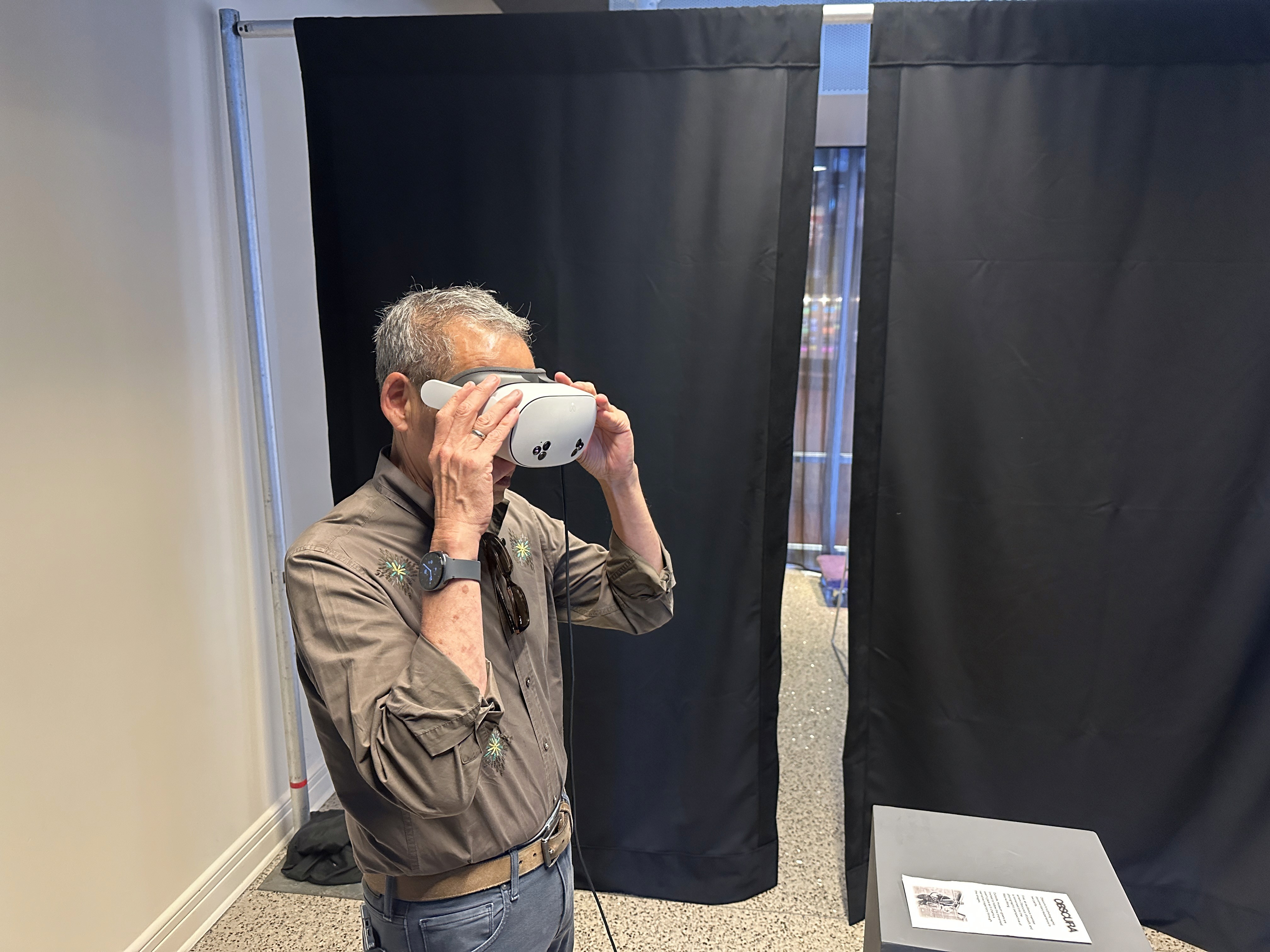
A participant experiencing images as the immersed viewer.
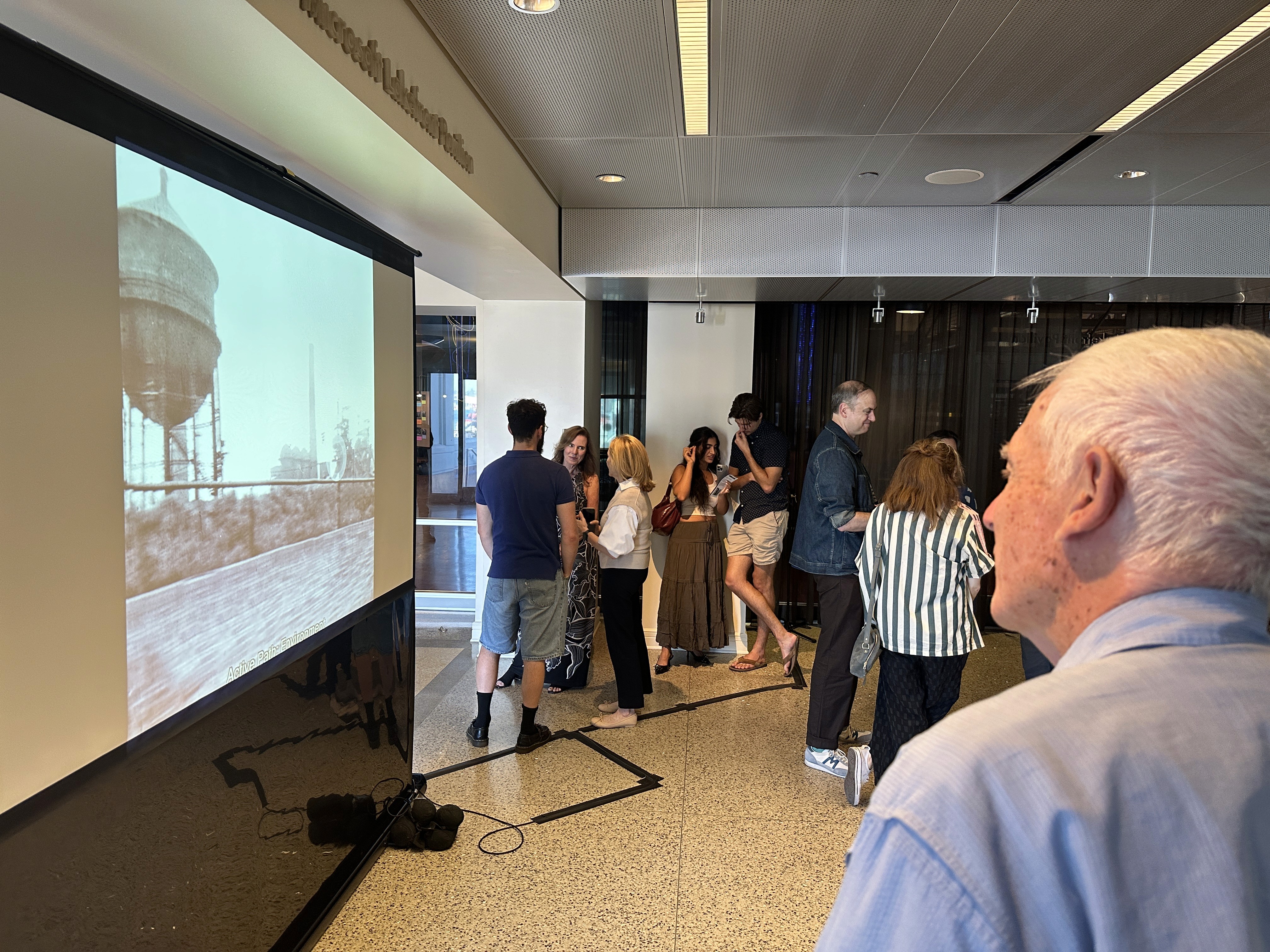
An audience member watches an immersed viewer experiencing the Environments path.
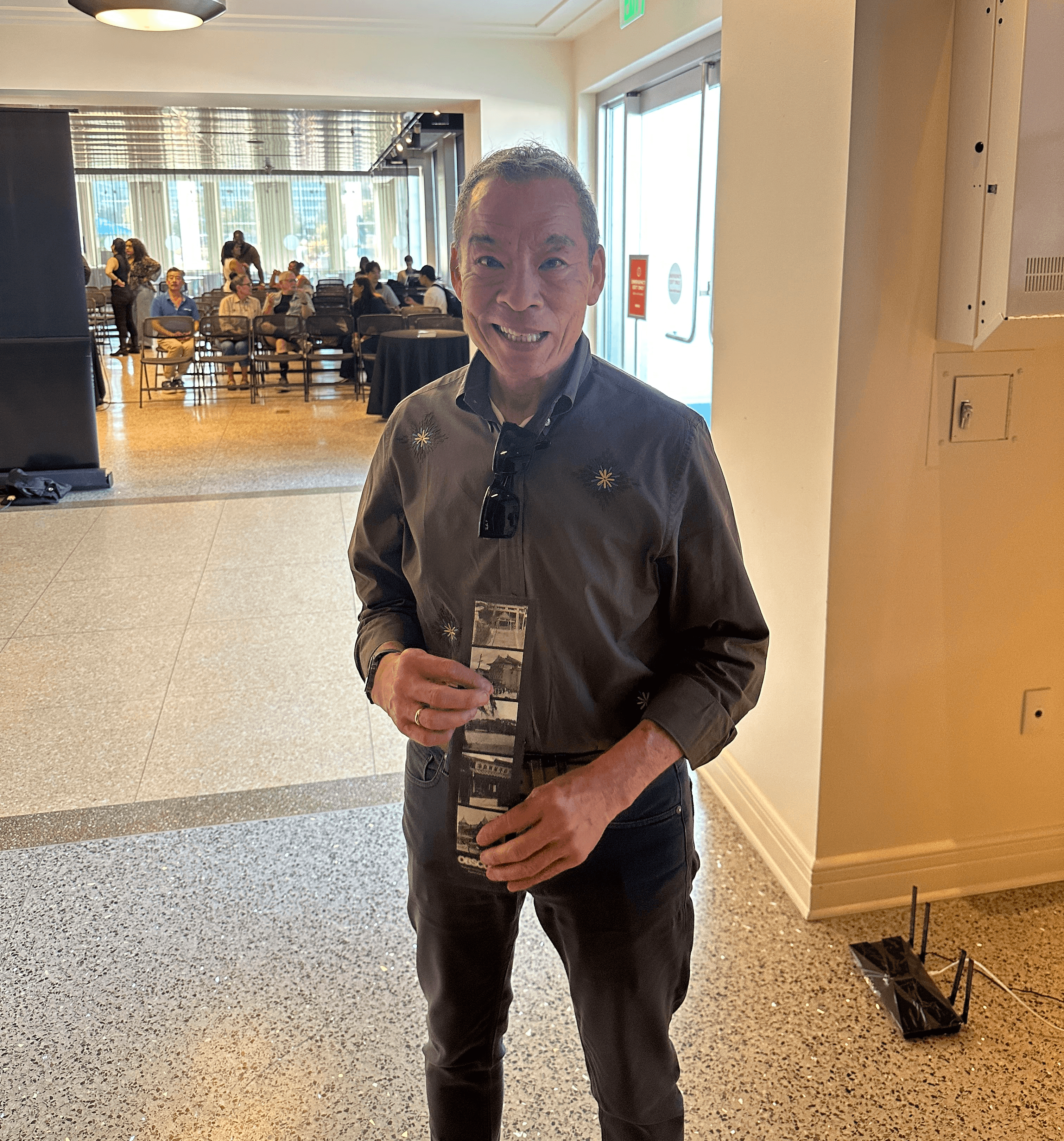
A participant holding the Environments photo-strip they received.
Research Themes
Derived from Curtis's story of discovering his father's photos.
CONNECTION
INTENT
MEANING
Research & Philosophy
We began with a blurry image of what we should make. To find clarity, we leaned on Daniel Kahneman's philosophy of the "Two Selves": the Experiencing Self (living through the moment) and the Remembering Self (the story we keep). We wanted to design for both.
The story behind the photos—discovered during an interview Curtis was conducting with Wayne—sparked three core research themes: Connection (between father and son), Intent (why did Wayne take certain photos?), and Meaning (what do these photos mean to different viewers?).
We interviewed younger Asian Americans and subject matter experts in museology, photography, art, and WWII Japanese history. The stories they shared were pivotal:
"Looking at old family photos can be very emotional. I'm the youngest of a very big family. So there's a lot of family history that I have no experience of, so getting to engage with photos from that time is really meaningful."
— Interview participant
"It's a really disorienting thing where you're scrolling, and you're watching something that's funny, and then you're looking at a recipe, and the next picture is of an atrocity."
— On Modern Media Fatigue
"He took many pictures of kids. I wonder how he got to know them? Did he ask if he could take the picture?"
— On Intent
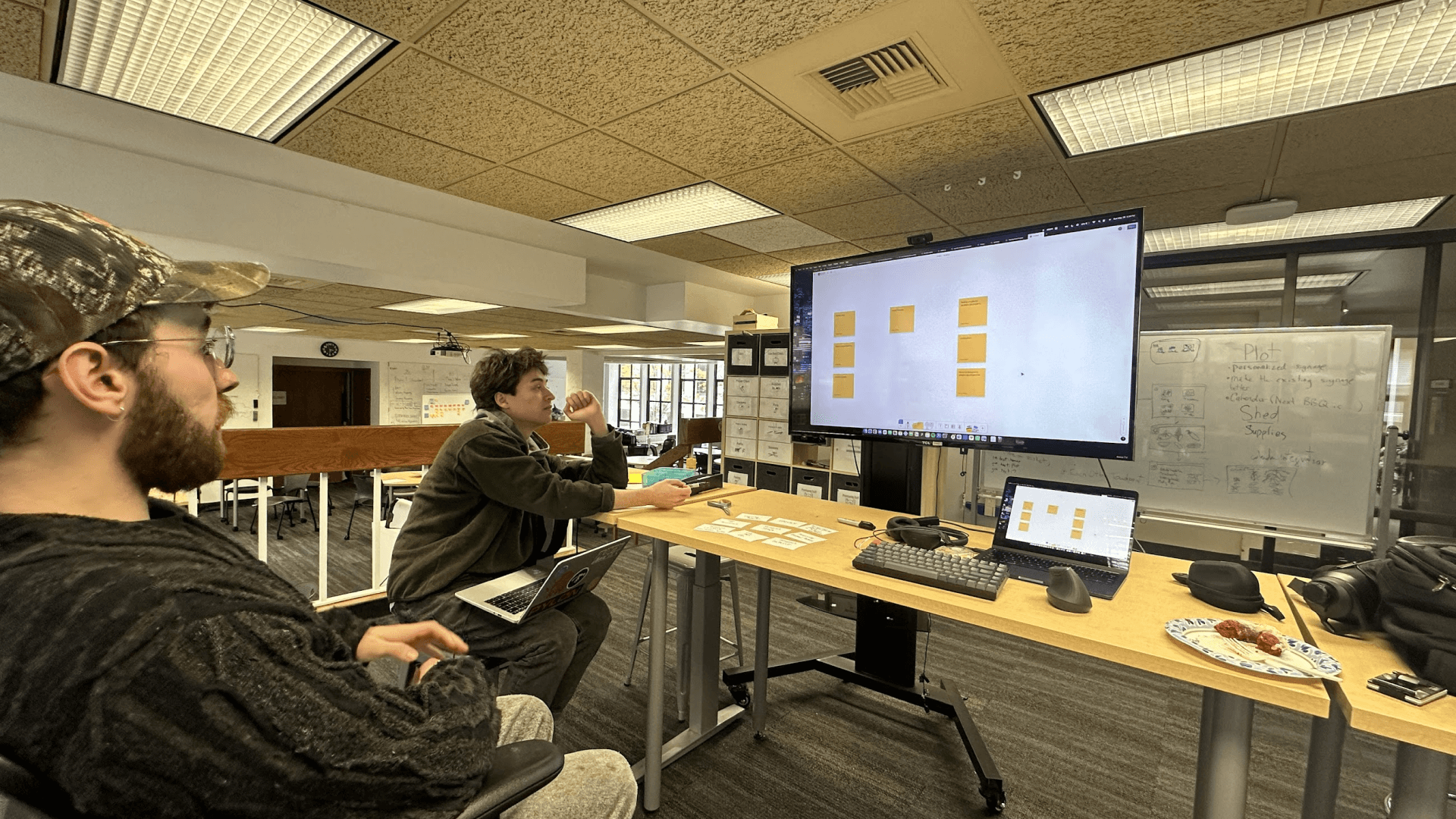
The team — figuring out what to do next
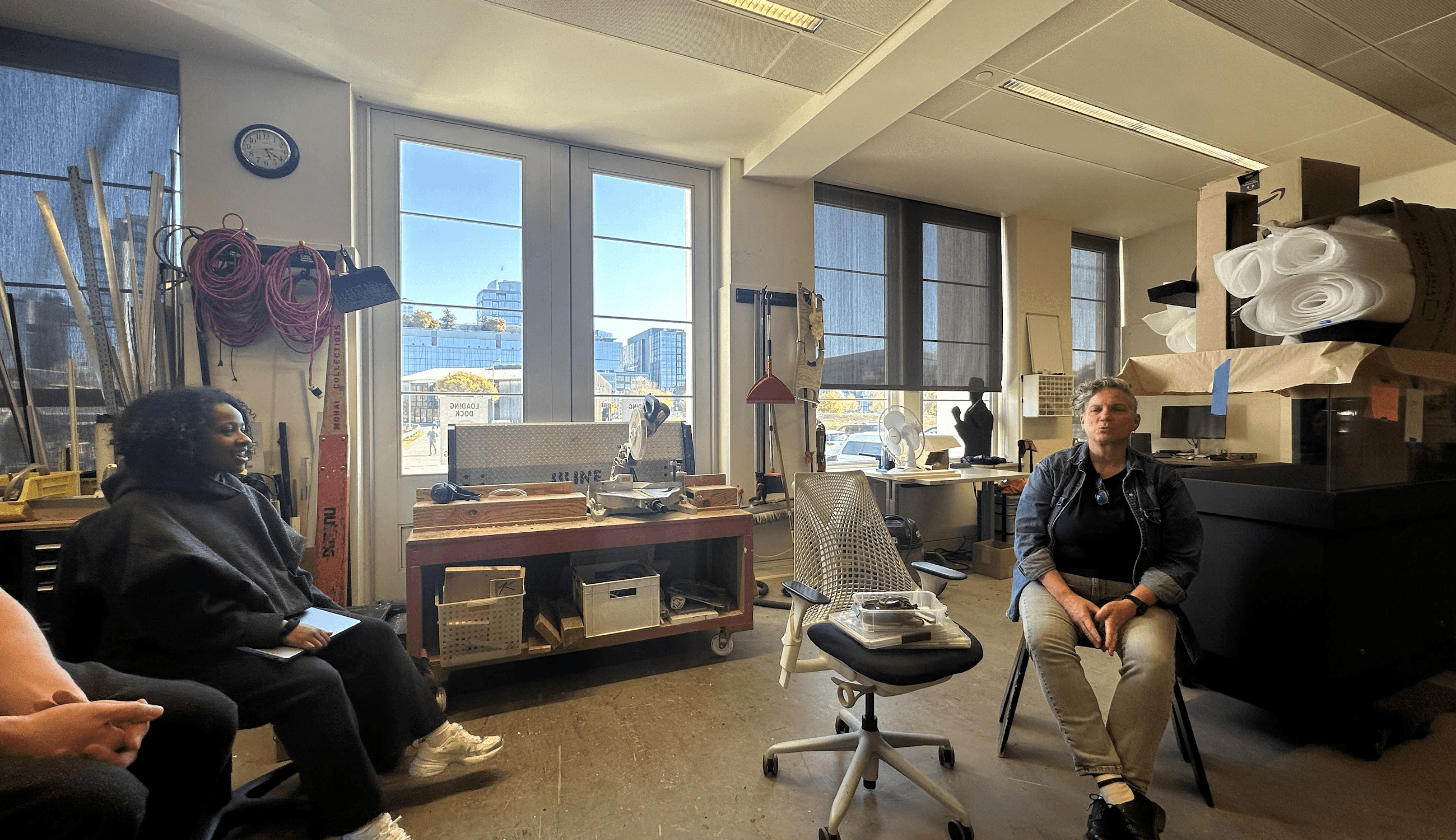
SME Interview with the Director of Exhibits at MOHAI.
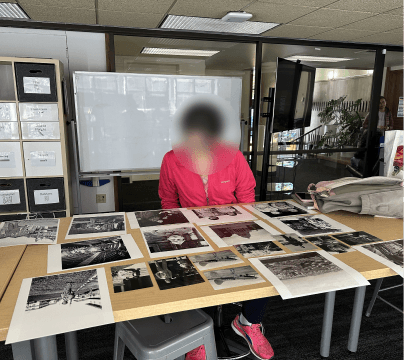
An interview participant looks over the images while thinking aloud.
Deciding what to make
We wanted to make something boundary-pushing but still achievable by our small team.
Ideation
At the beginning of our design process, we aligned on five adjectives we hoped our final design would exemplify. These became our north star for every decision—from the physical booth design to the pacing of image transitions.
INTROSPECTIVE
CONNECTED
REFLECTIVE
INTENT
INTENT
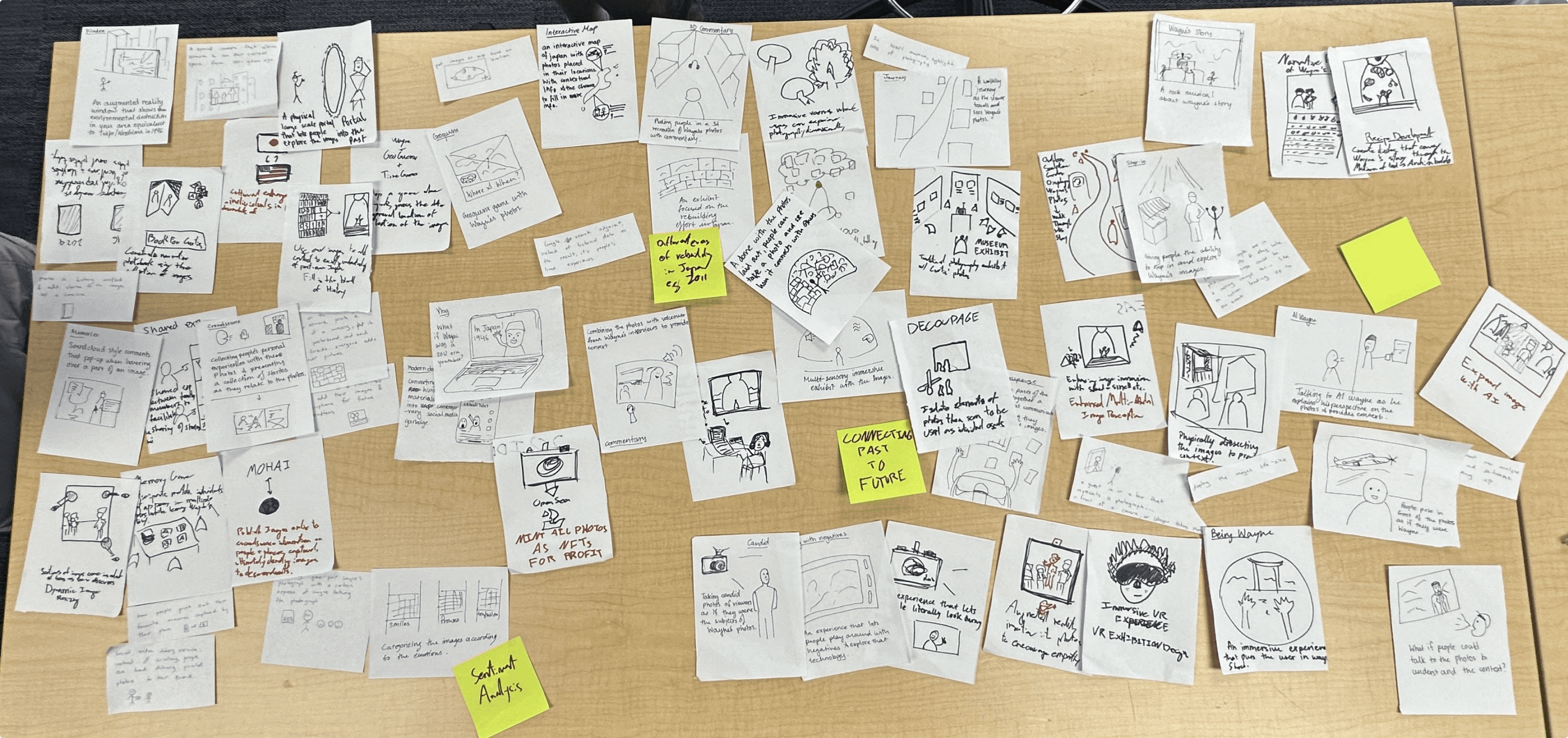
I ideated about 80 concepts. I encouraged thinking about ideas we specifically did not want to pursue (like NFTs or AI-modified images) as an exercise to get better recognition of what we did want to make.
Chosen Direction
After organizing and discussing our ideas — we noticed a common theme of immersing the viewer, allowing them to form their own stories with the images, while also connecting to a larger audience like in a traditional exhibit.
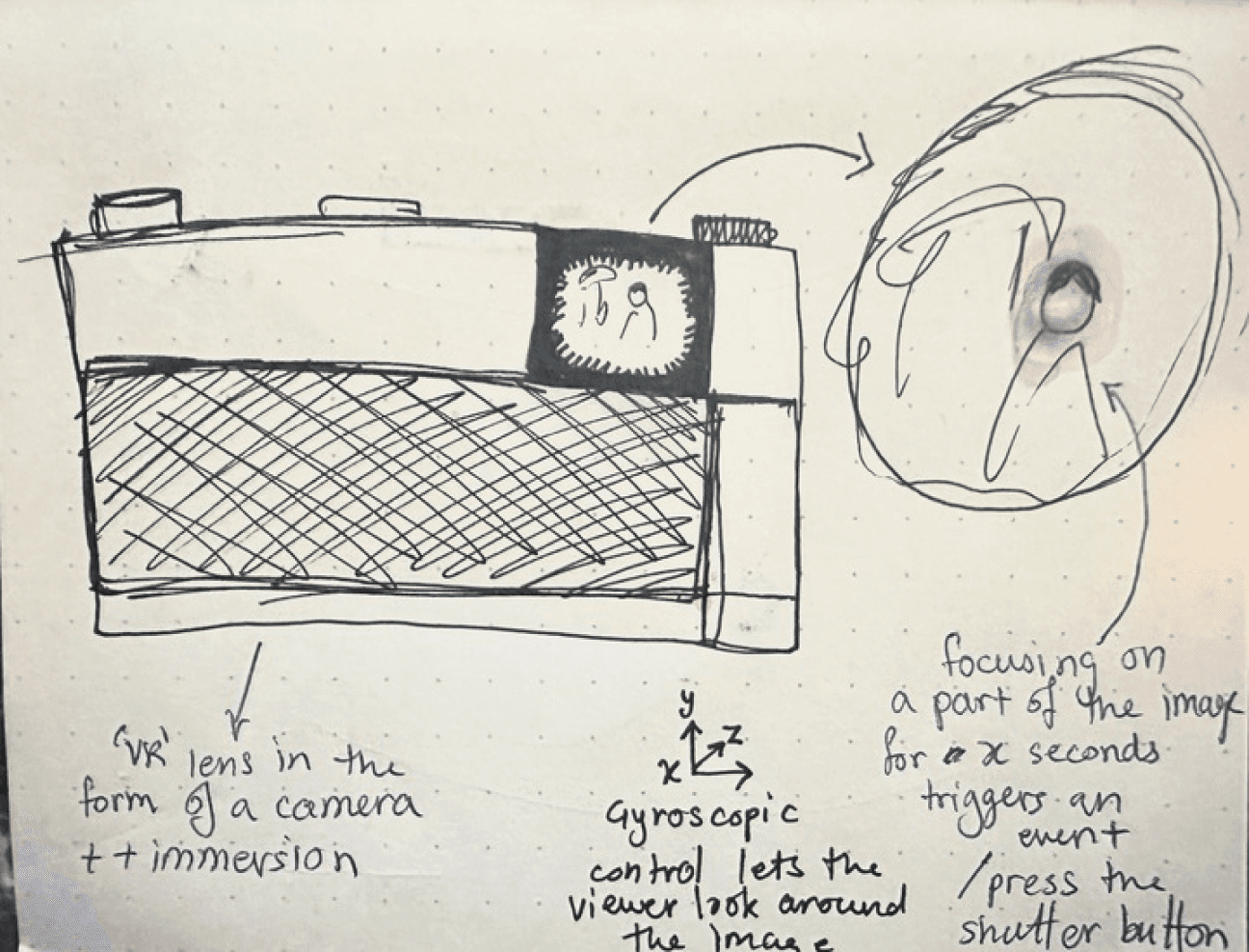
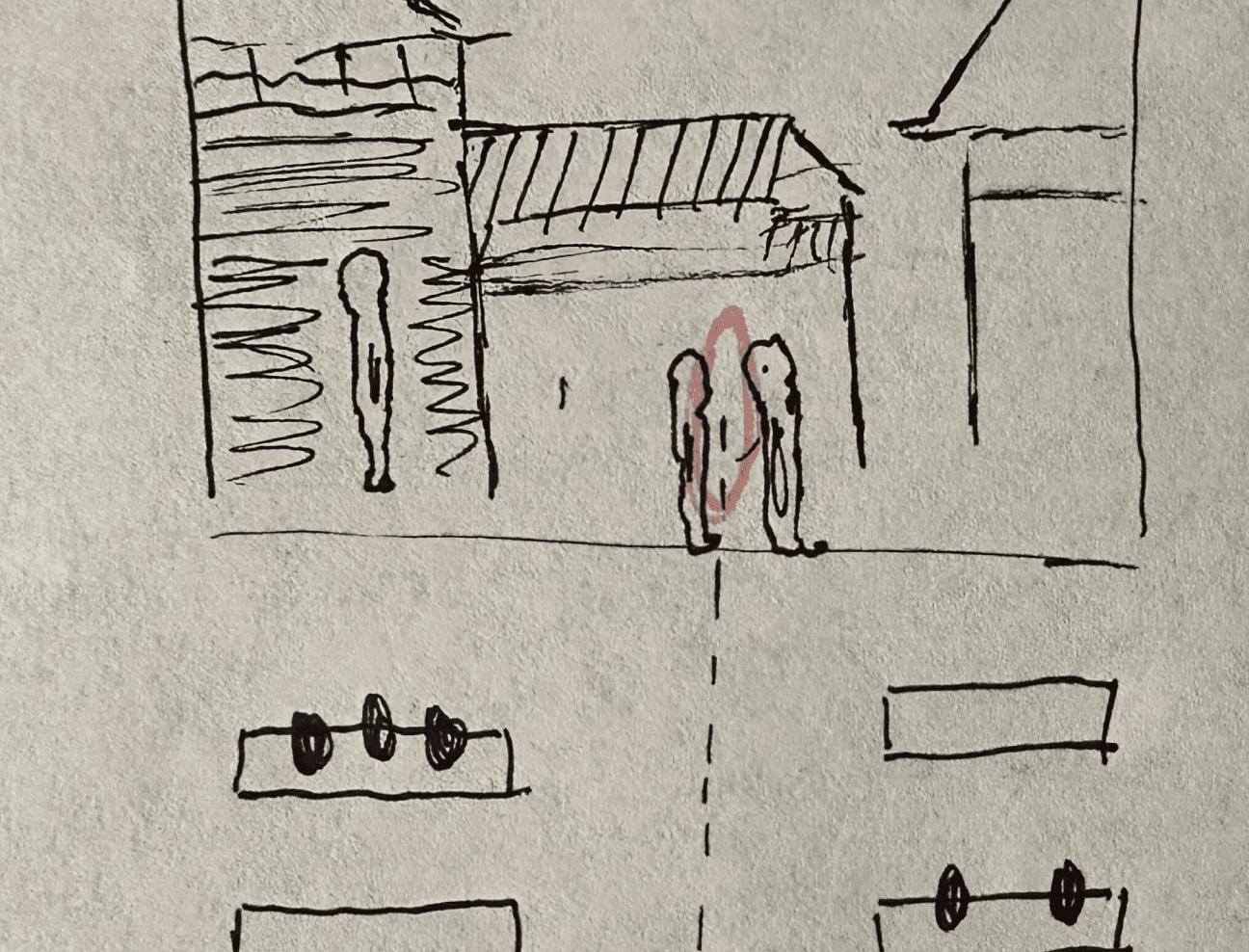
We knew we wanted to create an asynchronous photographic experience.
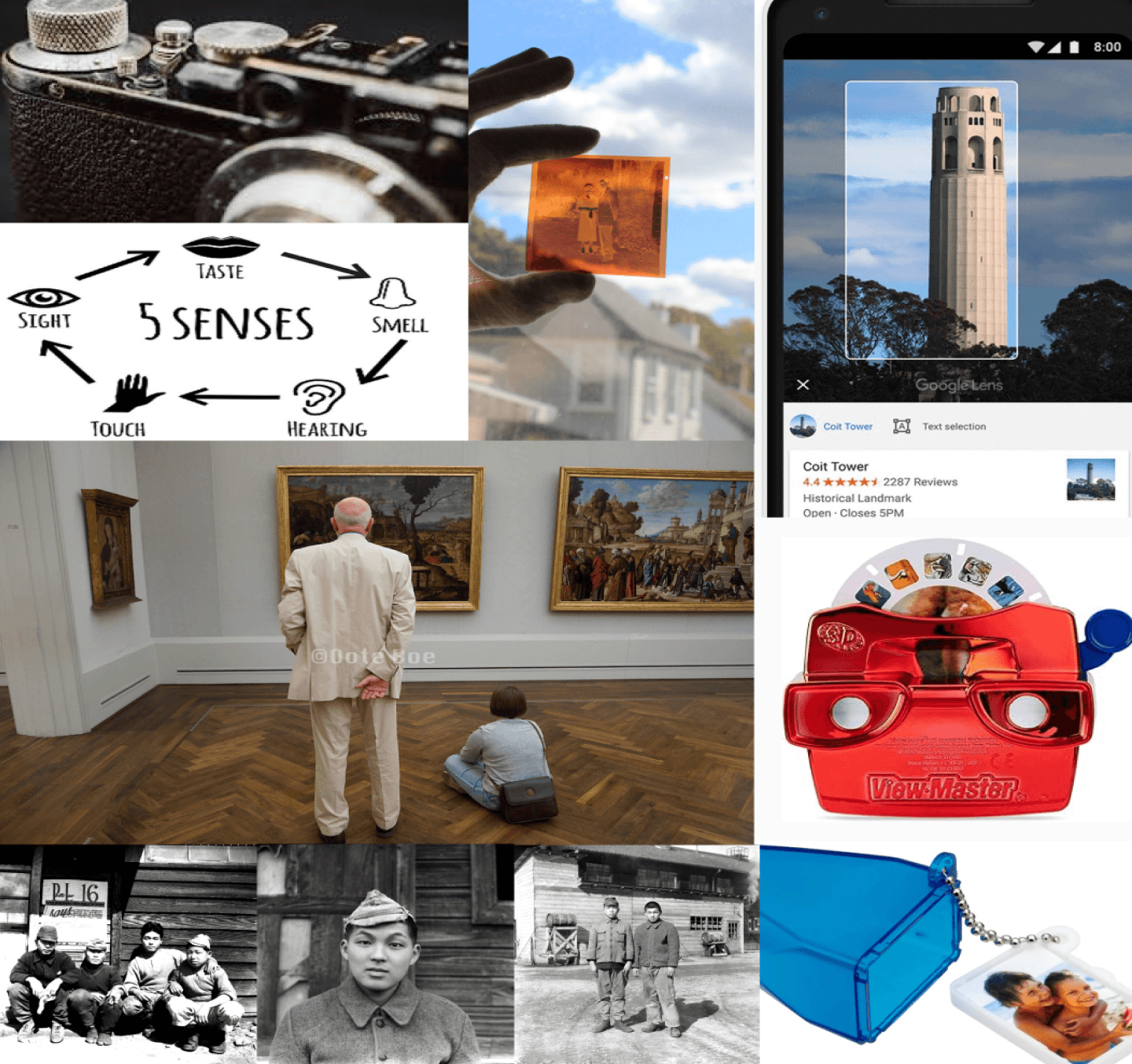
Mood board created based off our adjectives
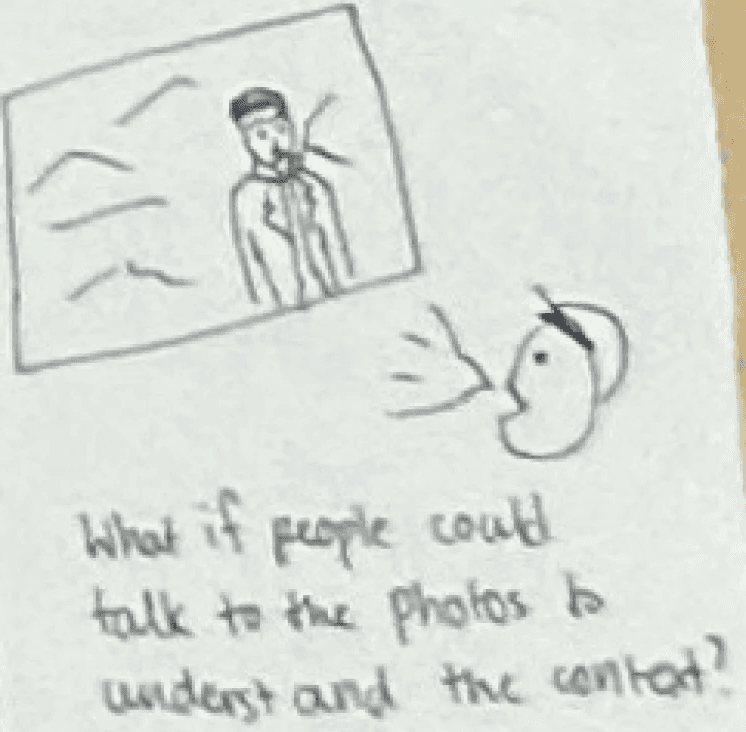
Early sketch asking "What if people could talk to the photos"
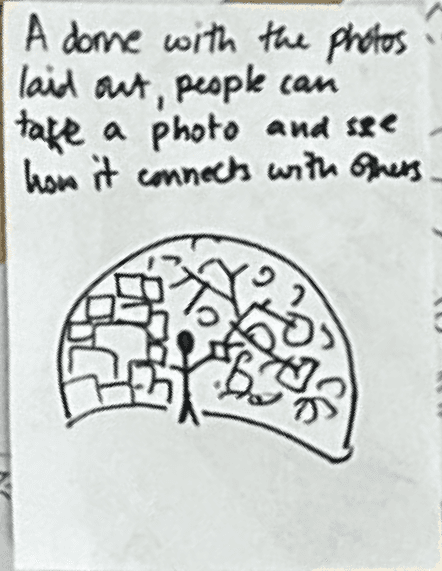
A concept that would let people create their own connections between Wayne's photos.